Mineral balancing is the foundation of true health because healing begins at the cellular level. While conventional medicine often evaluates isolated symptoms or relies on standard blood tests that fluctuate by the hour. Mineral balancing provides a systemic, bio-individual roadmap of your body’s dynamic stress response and cellular energy production.
Key Takeaways
- Tissue vs. Blood Testing: Blood maintains strict homeostasis (balance) at the expense of tissue; Hair Tissue Mineral Analysis (HTMA) acts as a cellular biopsy reflecting 3–4 months of metabolic activity.
- Lab Standard Matters: Analytical Research Labs, Inc. (ARL) does not wash hair at the facility, preserving critical water-soluble electrolytes (Na and K) that are essential for accurate ratio calculations.
- Ratios Over Levels: Individual mineral levels matter less than inter-mineral ratios like Ca/Mg (cellular gate), Ca/K (thyroid speed), Na/Mg (adrenal vigor), Na/K (vitality/stress), and Zn/Cu (hormone balance).
- Metabolic Oxidation Rates: HTMA identifies whether you are a Fast, Slow, or Mixed Oxidizer, allowing for targeted nutritional protocols rather than one-size-fits-all supplementation.
- Heavy Metal Displacement: Toxic metals like lead, mercury, and cadmium step in to fill enzyme binding sites when preferred minerals (calcium, zinc, magnesium) are depleted.
Table of Contents
- What Is Mineral Balancing? The Legacy of Dr. Paul Eck & Dr. Larry Wilson
- Why Testing Methodology Matters: The Analytical Research Labs, Inc. Difference
- Understanding Mineral Levels vs. Mineral Ratios
- The Core Mineral Ratios Explained
- Rates of Oxidation: The Body’s Metabolic Engine
- Heavy Metals: Toxic Antagonists & Mineral Displacement
- The Critical Role of Trace Minerals
- Frequently Asked Questions About Mineral Balancing & HTMA
- How to Begin Your Mineral Balancing Hair Analysis Journey
What Is Mineral Balancing? The Legacy of Dr. Paul Eck & Dr. Larry Wilson
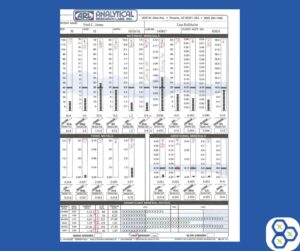
Pioneered by Dr. Paul Eck, founder of Analytical Research Labs, Inc. (ARL), and expanded by Dr. Larry Wilson, mineral balancing utilizes Hair Tissue Mineral Analysis (HTMA) as a soft tissue biopsy.
Unlike blood, which acts as a transport medium and maintains homeostasis at all costs (often borrowing from tissue reserves to keep blood levels within normal ranges), hair tissue reflects long-term mineral deposition and cellular retention over a reliable 1-to-2-month window.
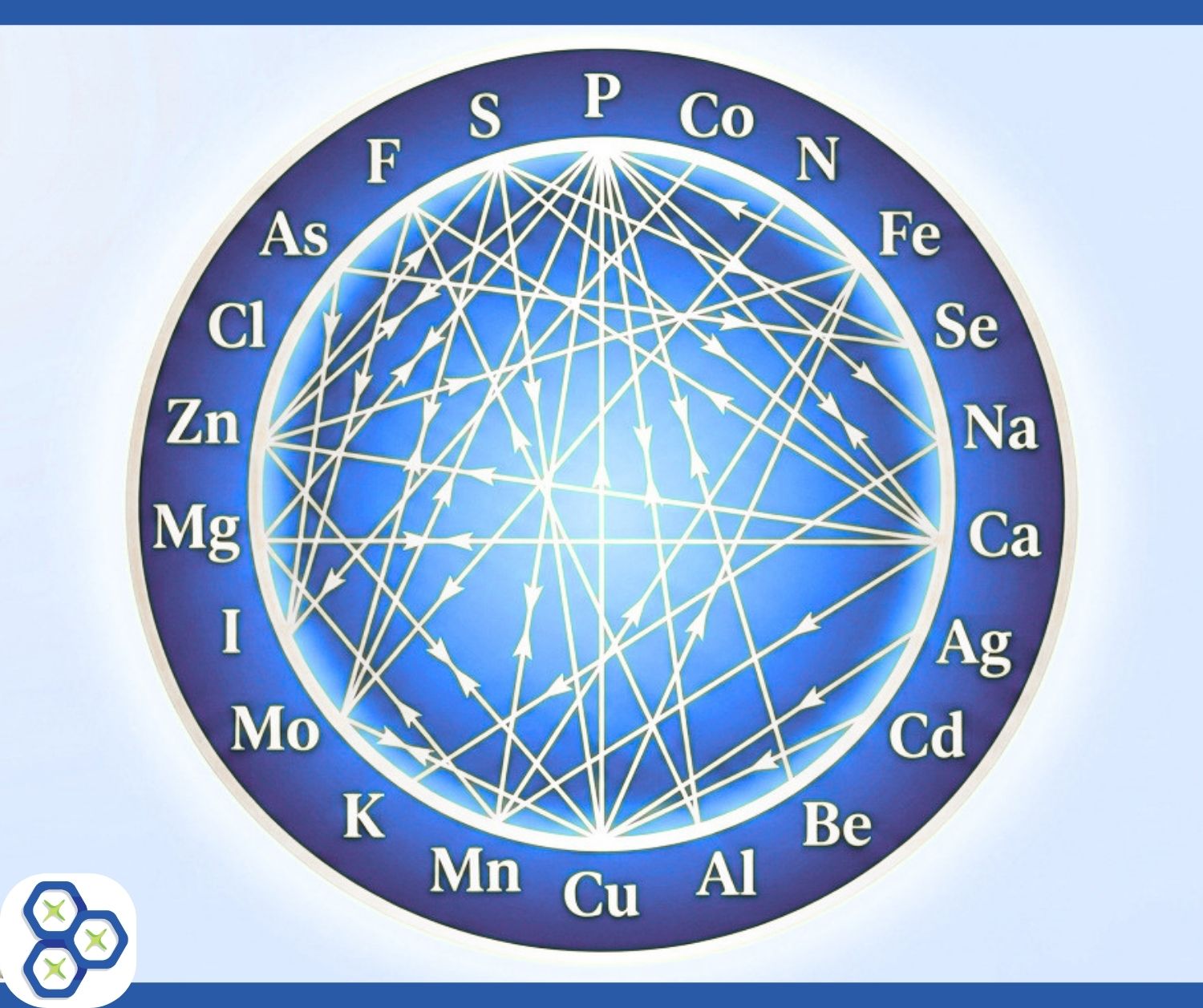
Through the work of Dr. Paul Eck, we understand that minerals do not act in isolation. They form intricate, interlocking web systems where a change in one mineral inevitably cascades through dozens of enzyme functions, hormone pathways, and autonomic nervous system responses.
To learn more about how hair functions as a tissue biopsy, read our detailed guide on Understanding Your Hair Analysis Results.
Why Testing Methodology Matters: The Analytical Research Labs, Inc. Difference
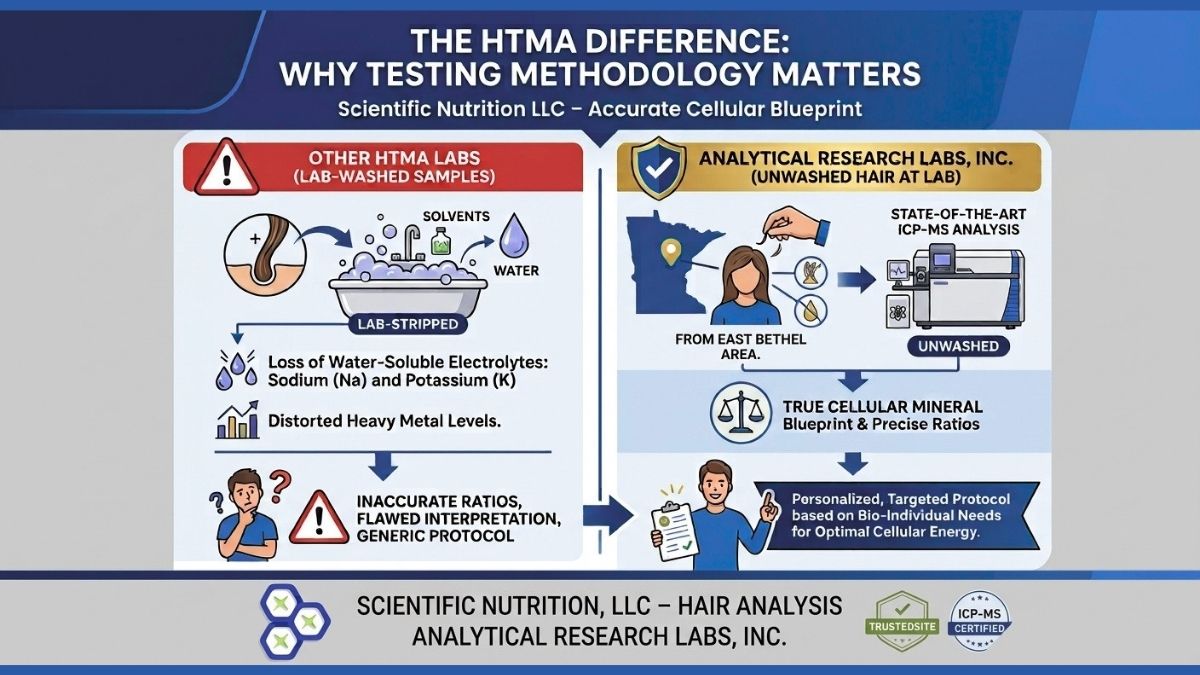
The accuracy of an HTMA depends entirely on sample preparation and laboratory standards. Analytical Research Labs, Inc. (ARL) sets the gold standard in hair analysis by utilizing state-of-the-art ICP-MS (Inductively Coupled Plasma Mass Spectrometry) technology.
The Unwashed Hair Advantage
ARL does not wash the hair samples at the laboratory prior to testing. Washing hair with detergent or harsh solvents in the lab strips away critical water-soluble minerals, specifically sodium and potassium, as well as loosely bound heavy metals. Stripping these elements artificially lowers sodium and potassium levels, yielding distorted ratios and inaccurate oxidation rates.
Home Hair Preparation Requirements
Since external elements can bond with the hair shaft, proper home sample collection is vital:
- Avoid Hard Water Deposits: Local municipal water or well water high in calcium, iron, or toxic metals can deposit directly onto hair tissue.
- Distilled Water Rinse: Always perform a thorough final rinse with distilled water during the final wash prior to sampling to clear external mineral residue without leaching internal cellular minerals.
Understanding Mineral Levels vs. Mineral Ratios
Looking at individual mineral numbers tells only part of the story. A person may have a “normal” level of calcium, but if potassium is severely depleted, that calcium becomes biologically unavailable. Dr. Paul Eck established that mineral ratios, the relationship between two key minerals, are far more important than individual levels.
For a full breakdown of essential mineral functions, explore our guide on Mineral Levels & Cellular Energy Blueprint.
The Core Mineral Ratios Explained
1. Calcium to Magnesium (Ca/Mg) Ratio: The “Lifestyle” & Cellular Gate Ratio
- Ideal Ratio: 6.67:1
- Cellular Mechanism: Calcium acts as the cellular “on” switch (triggering muscle contraction and cellular signaling). Magnesium acts as the “off” switch (allowing muscle relaxation, regulating the calcium gate, and driving ATP energy production in the mitochondria).
- High Ca/Mg Ratio (Above 6.67): Indicates glucose is struggling to enter the cell efficiently. High calcium relative to magnesium locks the cellular membrane, keeping the nervous system stuck in chronic tension. This leads to muscle cramps, poor glucose tolerance, and persistent insomnia.
- Low Ca/Mg Ratio (Below 6.67): Indicates hyper-excitability, rapid firing of the nervous system, and an inability to sustain steady cellular energy.
The Calcium Shell (The 2nd Most Important Pattern)
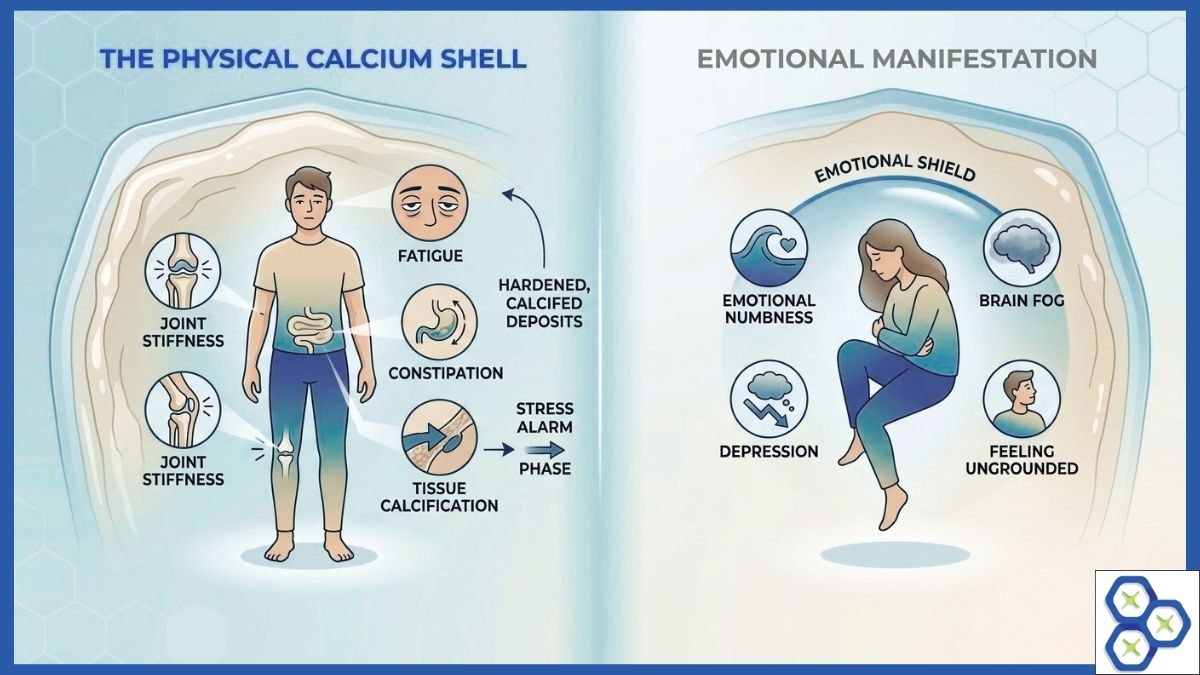
When tissue calcium climbs extremely high relative to other minerals (often a Ca/Mg ratio exceeding 10:1 or 12:1 alongside elevated total calcium), it forms a protective “calcium shell”.
Biologically, the body uses calcium as a defensive wall to blunt overwhelming psychological or physical stress.
- Physical Manifestation: Joint stiffness, fatigue, constipation, and tissue calcification.
- Emotional Manifestation: Feelings of being ungrounded, emotional numbness, depression, and brain fog as the body shields itself from further stress input.
2. Calcium to Potassium (Ca/K) Ratio: The Thyroid Ratio
- Ideal Ratio: 4.0:1
- Cellular Mechanism: Calcium inhibits thyroid hormone release at the cellular site, while potassium enhances cellular sensitivity to thyroid hormones. This ratio directly measures cellular energy output and thyroid efficiency, regardless of what circulating blood thyroid tests (TSH, Free T3, Free T4) show.
- High Ca/K Ratio (Above 4.0 – Slow Thyroid): Indicates sluggish cellular thyroid expression. Even if TSH appears normal, high calcium blunts thyroid hormone absorption, resulting in low body temperature, weight loss plateaus, dry skin, and chronic lethargy.
- Low Ca/K Ratio (Below 4.0 – Fast Thyroid): Indicates excessive thyroid expression at the cellular level, burning through energy reserves rapidly and creating inner restlessness, sweating, and rapid heart rates.
- Structural Balance: The Ca/K ratio is also a foundational factor governing the strength of teeth and bones, balancing bone mineralization with active muscle contraction capability.
3. Sodium to Magnesium (Na/Mg) Ratio: The Adrenal Energy Ratio
- Ideal Ratio: 4.17:1
- Cellular Mechanism: Sodium levels are directly regulated by aldosterone (an adrenal hormone), while magnesium acts as a buffer. This ratio measures immediately available adrenal energy and the body’s inflammatory baseline.
- High Na/Mg Ratio (Above 4.17): Reflects an acute inflammatory response driven by elevated aldosterone. At high levels, particularly when zinc is deficient, it indicates an increased risk for arteriosclerosis.
- Personality & Behavior: High Na/Mg drives hyper-excitability, extreme irritability, noise sensitivity (frequently seen in spectrum or sensory conditions), apprehensiveness, belligerence, and high-strung, aggressive behavioral traits.
- Low Na/Mg Ratio (Below 4.17): Indicates low adrenal vigor, chronic exhaustion, low blood pressure, and an inability to mount a proper inflammatory or immune response when needed.
4. Sodium to Potassium (Na/K) Ratio: The Vitality & Stress Ratio (The #1 Most Important Ratio)
- Ideal Ratio: 2.50:1
- Cellular Mechanism: The Na/K ratio governs the Sodium-Potassium Pump (Na/K -ATPase) across every cell membrane in the body. Governed by cortisol and aldosterone, this pump maintains the electrical potential necessary for nutrients to enter cells and metabolic waste to leave.
- High Na/K Ratio (Above 2.50): Associated with acute stress, high cortisol activity, and active inflammation. It frequently points to a primary zinc and/or magnesium deficiency and manifests as aggressive personality traits, water retention, and high blood pressure.
- Low Na/K Ratio (Below 2.50 – The “Burnout” Pattern): Indicates severe adrenal fatigue, cortisol exhaustion, impaired immune system function, and a strong tendency toward diabetic trends. Because the heart and kidneys depend heavily on the Na/K electrical gradient, a low Na/K ratio is associated with cardiac arrhythmias and deep emotional exhaustion, depression, or unexpressed fears. To learn more about this vital marker, read our post on Your Sodium to Potassium Ratio & Health Risks.
5. Zinc to Copper (Zn/Cu) Ratio: The Hormone & Neurotransmitter Ratio
- Ideal Ratio: 8.0:1
- Cellular Mechanism: Zinc and copper operate in a delicate balance that dictates cardiovascular integrity, thyroid conversion, neurotransmitter balance (dopamine vs. norepinephrine), and sex hormone production (progesterone vs. estrogen).
- High Zn/Cu Ratio (Above 8.0): Points to hidden copper deficiency or copper retention, driving low estrogen, skin dryness, and sluggish repair.
- Low Zn/Cu Ratio (Below 8.0): Indicates copper dominance or copper toxicity. This pattern triggers skin breakouts, PMS, anxiety, mood swings, elevated cholesterol, and histamine sensitivity.
Rates of Oxidation: The Body’s Metabolic Engine
Dr. Paul Eck classified metabolic types based on how fast or slow the autonomic nervous system and endocrine glands (thyroid and adrenals) burn through nutrients.
Metabolic Oxidation Rates Overview:
| Oxidation Rate | Ca/K Ratio | Na/Mg Ratio | Metabolic Description | Primary Symptoms Fast Oxidizer |
| Fast Oxidation | Below 4.0 | Above 4.17 | Sympathetic dominant; overactive adrenals and thyroid. | High blood pressure, anxiety, quick digestion, oily skin, inflammation. |
| Slow Oxidation | Above 4.0 | Below 4.17 | Parasympathetic dominant; sluggish adrenals and thyroid. | Fatigue, weight gain, constipation, depression, dry skin, cold hands/feet. |
| Mixed Oxidizer | Variable | Variable | Unstable metabolic state; one gland is fast while the other is slow. | Energy crashes, unpredictable mood swings, fluctuating appetite, chronic stress. |
Heavy Metals: Toxic Antagonists & Mineral Displacement
When essential minerals are depleted due to stress, poor diet, or environmental exposure, toxic heavy metals step in to occupy empty enzyme binding sites. This process, known as the Principle of Preferred Minerals, allows the body to survive in the short term, but causes long-term organ toxicity and metabolic slowdown.
To explore our full repository of metal-specific protocols, visit our main hub for Heavy Metal Toxicity & Mineral Displacement.
1. Lead (Pb)
Lead displaces calcium in bones and blood vessels. High levels contribute to neurotoxicity, anemia, high blood pressure, and severe developmental delays. To learn more about common exposures and health impacts, read our detailed guide on lead toxicity symptoms.
2. Mercury (Hg)
Mercury binds tightly to sulfhydryl groups in enzymes, disrupting zinc and selenium function. It causes severe brain fog, neurological damage, autoimmune reactions, and kidney stress. Discover how to identify exposure patterns in our full breakdown of mercury poisoning symptoms.
3. Cadmium (Cd)
Cadmium directly displaces zinc in the vascular system and kidneys. It creates brittle bones, high blood pressure, and intense emotional volatility. Review common sources and systemic effects in our guide on cadmium toxicity symptoms.
4. Arsenic (As)
Arsenic disrupts cellular respiration by poisoning the Krebs cycle and interfering with phosphorus. It manifests as chronic skin lesions, fatigue, and severe GI distress. Read our comprehensive report on arsenic toxicity symptoms to learn more.
5. Aluminum (Al)
Aluminum accumulates in brain tissue and bone, displacing magnesium and silicon. It is directly linked to premature memory loss, cognitive decline, and central nervous system distress. Explore the full impact on brain and bone health in our post on aluminum toxicity symptoms.
6. Nickel (Ni)
Nickel toxicity interferes with manganese and iron utilization, leading to skin rashes, chronic sinus irritation, and cellular hypoxia. Read our complete analysis on nickel toxicity symptoms for targeted insights.
Essential Heavy Metal Interrelationships
- Iron (Fe): Essential for oxygen transport, but high tissue iron drives oxidative stress (Fenton reaction), joint pain, and liver inflammation.
- Copper (Cu): Vital for energy and collagen, but unbound copper leads to mental anxiety, panic attacks, and severe tissue inflammation.
- Manganese (Mn): Governs ligament strength and mitochondrial function; low levels lead to joint instability and poor blood sugar control.
- Zinc (Zn): The ultimate healing mineral, required for over 300 enzymatic reactions, protein synthesis, and cortisol balance.
The Critical Role of Trace Minerals
Trace elements act as essential spark plugs for complex enzymatic reactions on an ARL hair analysis:
- Cobalt (Co): The central core of Vitamin B12. High levels point to industrial exposure or altered liver detox; low levels indicate poor methyl donor status and potential anemia.
- Molybdenum (Mo): Essential for the sulfite oxidase enzyme, which breaks down sulfites and aldehyde toxins. Molybdenum prevents copper toxicity and supports liver Phase II detoxification pathways.
- Lithium (Li): Governs neuroprotection, mood stability, and iodine transport into the thyroid. Low lithium is strongly linked to anxiety, spatial memory issues, and emotional instability.
- Boron (B): Regulates steroid hormone pathways (testosterone and estrogen) and works alongside calcium and magnesium to preserve bone matrix integrity.
Frequently Asked Questions About Mineral Balancing & HTMA
Mineral balancing is a targeted health protocol designed to restore optimal cellular energy, thyroid speed, adrenal function, and heavy metal excretion by balancing key nutrient ratios in the body.
Unlike blood tests, which only show a real-time snapshot, a Hair Tissue Mineral Analysis (HTMA) acts as a soft tissue cellular biopsy. As hair grows over 1 to 2 months, it locks in minerals and toxic heavy metals from blood and lymph fluids, providing a long-term metabolic blueprint of your cellular health.
Blood maintains strict homeostasis at all costs to keep you alive. If your tissues are depleted of calcium or magnesium, your body will borrow those minerals directly from your bones and organs to keep blood levels looking “normal.”
Consequently, blood tests rarely reflect tissue-level deficiencies until advanced illness sets in. Hair tissue is not subject to blood homeostasis, making hair mineral analysis a far more accurate tool for evaluating long-term mineral storage, cellular energy production, and metabolic oxidation rates.
Since minerals drive over 300 enzymatic reactions in the human body, mineral balancing addresses the root causes of many modern health complaints, including:
• Chronic fatigue, adrenal burnout, and low stamina
• Thyroid dysregulation (hypothyroidism or sluggish metabolism)
• Anxiety, brain fog, depression, and poor stress resilience
• Hormonal imbalances, estrogen dominance, and severe PMS
• Blood sugar crashes, insulin resistance, and stubborn weight plateaus
• Digestive issues, constipation, and gallbladder strain (especially post-GLP-1 therapy)
HTMA Testing Guidelines & Supplement Ratios
Analytical Research Labs, Inc. (ARL) sets the gold standard in HTMA testing by analyzing unwashed hair samples. Most commercial labs wash hair with harsh solvents before testing, which strips away critical water-soluble minerals like sodium (Na) and potassium (K). Stripping these electrolytes artificially distorts your core ratios, such as the Adrenal Ratio (Na/Mg) and Thyroid Ratio (Ca/K), leading to inaccurate oxidation ratings and flawed supplement recommendations.
Chemical treatments like hair dyes, bleach, and perms alter the hair shaft and deposit external chemicals, which can distort your mineral reading.
For the most accurate HTMA results, always sample clean, untreated hair cut directly from the nape of the neck as close to the scalp as possible. If your head hair is currently treated, you can allow 1 to 1.5 inches of natural root growth before sampling, or utilize clean body hair (pubic or chest hair) as an alternative baseline.
Taking generic supplements or high-dose single minerals without testing often worsens underlying metabolic imbalances. For example, taking heavy doses of Vitamin D or calcium when you already have a high Calcium-to-Potassium ratio (Ca/K) will further slow your thyroid and lock you into a Calcium Shell.
Mineral balancing uses precise HTMA data to deliver a bio-individual supplement and dietary protocol tailored specifically to your unique metabolic oxidation rate.
Hair Analysis and How to Begin Your Mineral Balancing Journey
You cannot guess your biochemistry, you must test it!
Trying to address health challenges by taking random supplements often worsens existing mineral imbalances, pushing key cellular ratios further out of alignment. Whether you are navigating chronic fatigue, metabolic plateaus, or recovering from modern weight-loss therapies like GLP-1 medications, which can drastically increase gallbladder strain and mineral purging, a precisely interpreted HTMA provides the baseline data needed to heal.
For more on managing gut issues and motility during rapid weight loss, read our guide on Natural Gallbladder Support & GLP-1 Risks. Likewise, if you are experiencing the long-term biological impact of chronic stress, read our in-depth blog on Trauma Causes Gray Hair: The Mineral Depletion Link to see how mineral exhaustion accelerates physical aging.
By analyzing your unique mineral blueprint through Analytical Research Labs, Inc. and implementing a targeted protocol of bioavailable minerals, dietary adjustments, and gentle heavy-metal detoxification, you can restore your cellular energy, balance your endocrine system, and reclaim your vitality from the root cause up.
Why Book a Complimentary Mineral Balancing Consultation?
- Uncover Root Causes: Pinpoint hidden mineral antagonisms and toxic heavy metal burdens.
- Get a Targeted Protocol: Receive custom supplement and dietary guidance tailored to your bio-individual needs.
- Expert Coaching: Partner with a certified practitioner to guide your cellular recovery step-by-step.