
Do you or someone you love struggle with an ADHD diagnosis, persistent brain fog, or uncontrollable hyper-reactivity? Exploring heavy metal toxicity and ADHD detoxification is the essential missing conversation in modern neurodevelopmental care today.
Millions of families find themselves trapped in a cycle of managing focus and behavioral challenges without ever discovering why the nervous system is overwhelmed in the first place.
Behavioral challenges, learning difficulties, and executive dysfunction are rarely isolated psychiatric disorders originating in a vacuum.
Restoring Cellular Energy Dynamics
Extensive clinical research shows that environmental toxins, cellular nutrient depletion, and metabolic disruption allow symptoms. These factors often drive attention and emotional regulation issues. By looking beyond surface symptoms and evaluating the heavy metal burden stored deep within cellular tissues, you can unlock real, lasting recovery. The key is improving energy to help the body to naturally detoxify.
Key Takeaways
- Temporary Management vs. Root Cause: Conventional ADHD medications—including traditional stimulants like Ritalin, Concerta, and Adderall, as well as targeted clinical interventions like Centanafadine and Tranexamic Acid—only manage symptoms temporarily; they do not cure, correct, or resolve underlying cellular imbalances.
- Severe Medication Risks: Beyond common side effects like insomnia and appetite loss, standard ADHD medications carry serious long-term risks, including cardiovascular strain, dependency, psychiatric disturbances, and severe allergic or thromboembolic complications.
- The Neurotoxic Connection: Published research on PubMed and the NIH proves that heavy metals like lead, mercury, cadmium, aluminum, and bio-unavailable copper impair executive function, trigger brain fog, alter neurotransmitters, and provoke severe behavioral swings.
- Compounded Biochemical Stress: Dietary factors such as high sugar intake, caffeine, food additives, intestinal yeast overgrowth (Candida), and trace mineral deficiencies (magnesium, zinc, calcium) exacerbate central nervous system hyper-reactivity.
- Targeted Cellular Detoxification: Utilizing Hair Tissue Mineral Analysis (HTMA) provides a precise blueprint of deep tissue metal burdens and mineral deficiencies, allowing for safe, non-invasive detoxification that targets the root cause of neurological distress.
Table of Contents
- The Hidden Truth About Conventional ADHD Medications
- Uncovering the Root Causes of Executive Dysfunction
- The Neurotoxic Burden: How Heavy Metals Impact Mental and Physical Health
- Biochemical Stressors: Sugar, Yeast Overgrowth, and Mineral Depletion
- Natural Cellular Detoxification and HTMA Solutions
- Frequently Asked Questions About Heavy Metals and ADHD
- Take the Next Step Toward Cellular Wellness
The Hidden Truth About Conventional ADHD Medications
Pharmaceutical management remains the standard frontline response for focus and impulse control challenges. However, it is vital to acknowledge a critical boundary: prescription medications do not cure, correct, or repair underlying physiological dysfunction; they merely manage surface symptoms to a degree.
These drugs operate by forcibly altering synaptic neurotransmitter concentrations so the underlying biochemical imbalances remain entirely unaddressed whenever the medication wears off.
Central Nervous System Stimulants: Ritalin, Concerta, and Adderall
Traditional stimulants increase central nervous system activity by blocking the reuptake of dopamine and norepinephrine or accelerating their synaptic release. While this can temporarily sharpen immediate focus, the physical cost to the body can be substantial.
- Ritalin (Methylphenidate):
- Common Side Effects: Decreased appetite, difficulty sleeping (insomnia), mild stomach pain, headaches, nervousness, and emotional flattening.
- Serious Side Effects: Cardiovascular strain (including tachycardia and hypertension), growth suppression in pediatric patients, severe psychiatric rebound effects, motor tics, and potential dependency.
- Concerta (Extended-Release Methylphenidate):
- Common Side Effects: Persistent nausea, dry mouth, dizziness, weight loss, and irritability as the osmotic time-release mechanism wears off.
- Serious Side Effects: Severe anxiety spikes, cardiovascular arrhythmia, mood disturbances, hallucinations, and peripheral vasculopathy (including Raynaud’s phenomenon).
- Adderall (Amphetamine/Dextroamphetamine Salts):
- Common Side Effects: Restlessness, severe loss of appetite, dry mouth, sleep disturbances, and digestive upset.
- Serious Side Effects: Elevated risk of stroke and heart attack, severe addiction or psychological dependence, extreme amphetamine-induced psychosis, aggressive behavioral shifts, and cardiovascular collapse under stress.
Targeted Clinical Interventions: Centanafadine and Tranexamic Acid
In addition to traditional stimulants, researchers continually explore specialized non-stimulants and emerging pharmaceutical agents:
- Centanafadine: A novel triple reuptake inhibitor (targeting norepinephrine, dopamine, and serotonin pathways simultaneously) evaluated for managing ADHD symptoms.
- Common Side Effects: Nausea, decreased appetite, somnolence (excessive fatigue), headaches, diarrhea, and skin rashes.
- Serious Side Effects: Blood pressure fluctuations, potential cardiac stress, severe gastrointestinal distress, and unpredictable mood disturbances during pathway adaptation.
- Tranexamic Acid: While primarily an antifibrinolytic drug prescribed to prevent excessive blood loss, occasional clinical inquiries examine its systemic cellular and micro-vascular interactions.
- Common Side Effects: Back or joint pain, muscle cramping, throbbing headaches, nasal congestion, abdominal discomfort, and diarrhea.
- Serious Side Effects: Severe thromboembolic events (life-threatening blood clots, deep vein thrombosis, pulmonary embolism), anaphylaxis or severe systemic allergic reactions, vision impairment (retinal occlusion), and seizures.
Summary of Effects of ADHD Medications and Need for Detoxification
The table below summarizes the key differences between standard pharmacological interventions and targeted HTMA nutritional protocols:
| Medication | Primary Mechanism | Common Side Effects | Serious Risks & Limitations |
| Ritalin (Methylphenidate) | Central nervous system stimulant; blocks dopamine & norepinephrine reuptake | Decreased appetite, insomnia, stomach pain, headaches, nervousness, emotional flattening | Symptom management only; cardiovascular strain (tachycardia, hypertension), growth suppression, psychiatric rebound, motor tics, dependency risk |
| Concerta (Extended-Release Methylphenidate) | Extended-release stimulant via osmotic time-release mechanism | Nausea, dry mouth, dizziness, weight loss, irritability as dose wears off | Severe anxiety spikes, cardiac arrhythmia, hallucinations, mood disturbances, Raynaud’s phenomenon |
| Adderall (Amphetamine / Dextroamphetamine) | Amphetamine salts; stimulates catecholamine release into synaptic cleft | Restlessness, severe loss of appetite, dry mouth, sleep disruption, digestive upset | Elevated risk of stroke & heart attack, severe addiction/dependence, amphetamine-induced psychosis, aggressive behavioral shifts |
| Centanafadine | Triple reuptake inhibitor (Norepinephrine, Dopamine, Serotonin) | Nausea, decreased appetite, excessive fatigue, headaches, diarrhea, skin rash | Non-stimulant option; blood pressure fluctuations, cardiac stress, severe GI distress, unpredictable mood shifts during adaptation |
| Tranexamic Acid | Antifibrinolytic agent (Coagulation pathway modulation) | Joint/back pain, muscle cramps, throbbing headaches, nasal congestion, abdominal discomfort | Off-label context; severe thromboembolic events (blood clots, DVT, pulmonary embolism), vision impairment, seizures, severe allergic reactions |
Uncovering the Root Causes of Executive Dysfunction and Neurological Distress
Behavioral challenges, learning disabilities, and executive dysfunction are rarely isolated psychiatric disorders originating in a vacuum.
Although conventional care often views these difficulties through a single diagnostic lens, extensive clinical observation demonstrates that attention and focus issues represent a complex collection of symptoms driven by underlying environmental toxins, cellular nutrient depletion, and metabolic disruption.
When toxic elements cross the blood-brain barrier, they directly alter delicate brain chemistry, mimic essential trace minerals, and trigger continuous neurological inflammation. Consequently, individuals experience persistent brain fog, emotional volatility, and hyper-reactivity.
By looking beyond surface behaviors to evaluate the hidden toxic load stored deep within cellular tissues, families can finally address the true physical drivers of neurological distress and chart a path toward lasting recovery.
The Neurotoxic Burden: How Heavy Metals Impact Mental and Physical Health
Peer-reviewed medical literature indexed across PubMed and the National Institutes of Health (NIH) confirms that heavy metal accumulation plays a massive role in neuro-developmental vulnerability. Additionally, toxic metals cross the placenta during fetal development and pass through the blood-brain barrier, acting as direct cellular irritants.
- Lead (Pb): Large-scale studies published in The Lancet and NIH repositories confirm that there is no safe blood lead level in children. Lead accumulation correlates directly with reduced IQ, hyperactive behavior, severe learning delays, and aggressive impulsivity by disrupting calcium-dependent neurotransmitter release.
- Mercury (Hg): Highly toxic to neural cell membranes, mercury disrupts critical enzymes and neurotransmitter binding sites. Exposure through maternal amalgams, contaminated seafood, or historical medical preservatives leads to many symptoms. These include severe brain fog, social withdrawal, emotional volatility, and auditory processing difficulties.
- Cadmium (Cd): Found in refined foods, tap water, and secondhand smoke. Cadmium is strongly associated with anti-social behavior, poor stress tolerance, and learning deficits. Toxic cadmium directly displaces zinc within brain tissue, destroying natural emotional stability.
- Aluminum (Al): Children routinely accumulate aluminum from cookware, municipal tap water, and daily personal care items. Aluminum toxicity impairs cognitive processing, memory storage, and speech development.
- Biounavailable Copper (Cu): Hair mineral analyses on over 130,000 children reveal that copper toxicity or imbalance is heavily linked to ADHD symptoms. Excess unbound copper over-stimulates the diencephalon (the primitive “animal brain”). Therefore, this induces intense panic, acute anxiety, racing thoughts, extreme mood swings, and violent outbursts while suppressing higher cortical reasoning.
Biochemical Stressors: Sugar, Yeast Overgrowth, and Mineral Depletion
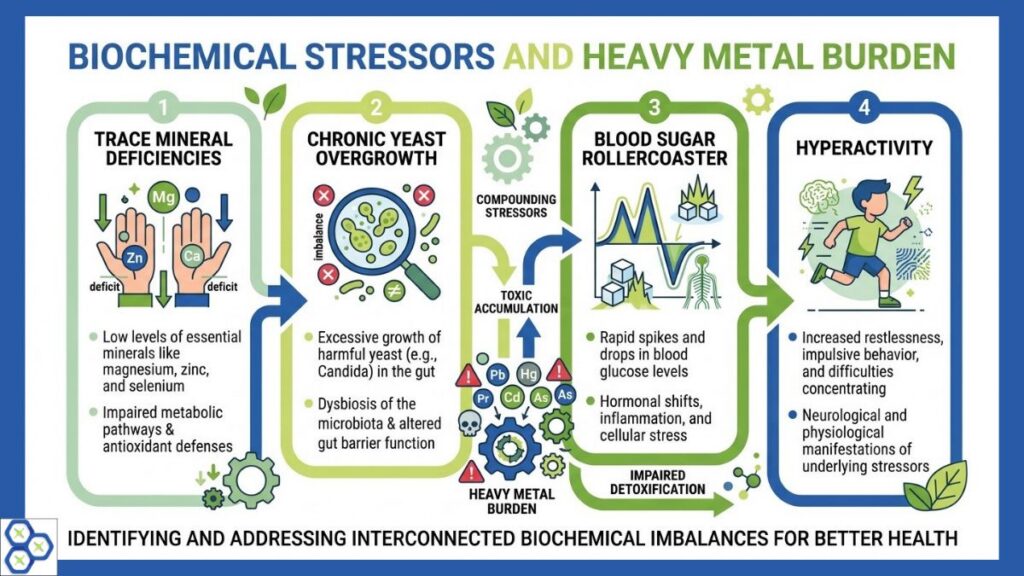
Heavy metal toxicity does not occur in isolation; it interacts dynamically with daily dietary habits and metabolic stress.
Critical Trace Mineral Depletions
Calcium, magnesium, and zinc act as vital psychological buffers. Calcium and magnesium calm the nervous system and relax muscle tissue. When magnesium is deficient, individuals experience extreme irritability, sleep fragmentation, and physical restlessness.
Zinc functions as a primary mood-stabilizing neurotransmitter; without adequate zinc, toxic metals like copper and cadmium rapidly take its place. Furthermore, subtle iron or lithium deficiencies further destabilize cognitive focus and emotional balance.
Refined Sugars, Caffeine, and Intestinal Candida
High-sugar diets and caffeinated beverages create severe blood sugar rollercoasters, causing rapid adrenaline spikes followed by intense cellular energy crashes. In addition, frequent sugar intake and antibiotic exposures foster chronic intestinal overgrowth of Candida albicans.
Yeast organisms produce toxic byproducts like acetaldehyde and ethanol. These circulate directly to the brain to produce severe “brain fog,” lethargy, and erratic behavior.
Natural Cellular Detoxification and HTMA Solutions
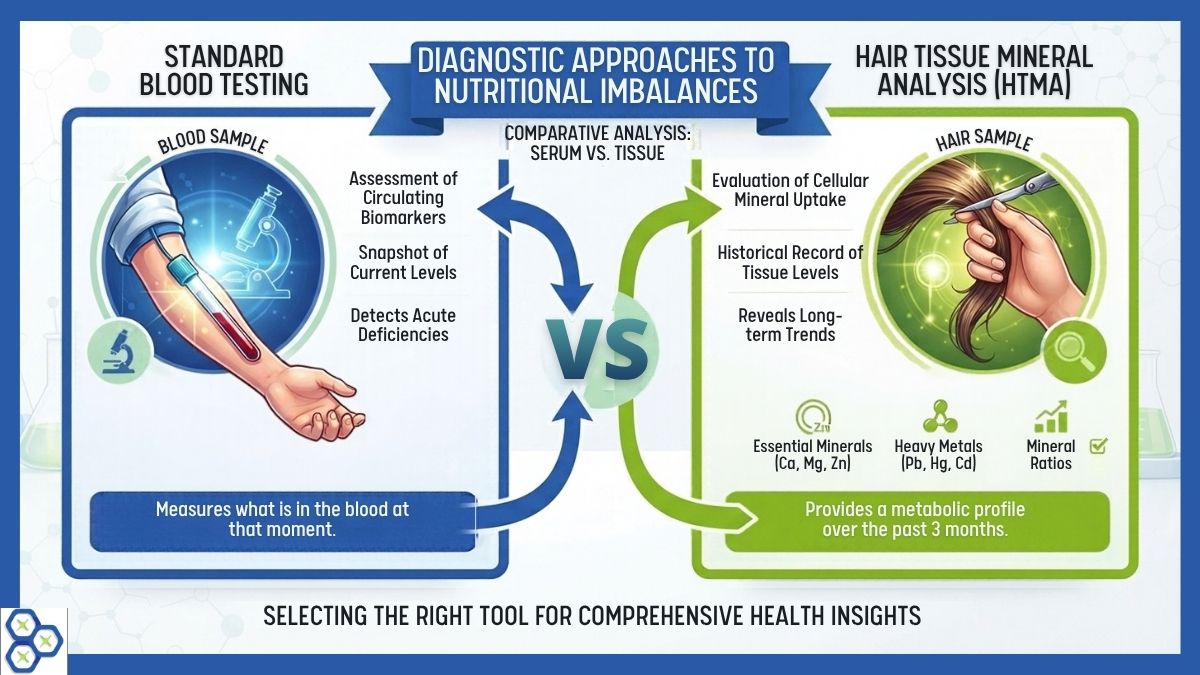
Standard blood tests only measure acute, real-time vascular transport. Consequently, blood tests frequently fail to detect heavy metals that have settled deep within organs, bone, and neural tissue.
Because of this limitation, addressing heavy metal toxicity and ADHD detoxification requires evaluating tissue storage. It is a more comprehensive look rather than relying solely on blood work.
For this reason, Hair Tissue Mineral Analysis (HTMA) serves as an invaluable diagnostic tool. Endorsed by the U.S. Environmental Protection Agency (EPA) as a reliable method for measuring toxic metal burdens. HTMA provides a non-invasive cellular biopsy reflecting months of mineral metabolism.
Due to the fact that mobilizing heavy metals without a stable mineral foundation can cause uncomfortable detox reactions, it is critical to follow a personalized detox protocol guided by HTMA to safely rebuild cellular energy before initiating targeted clearance.
Utilizing targeted heavy metal toxicity and ADHD detoxification protocols allows individuals to gently mobilize stored toxins while restoring foundational trace minerals.
Addressing Root-Cause Mineral Imbalances
Ultimately, by utilizing precise HTMA profiling, a customized protocol can be created to:
- Restore Foundational Bio-Minerals: Replenish bioavailable zinc, magnesium, calcium, and trace minerals to naturally calm hyper-reactive nerves.
- Support Natural Detoxification Pathways: Utilize targeted nutritional balancing to safely mobilize stored lead, mercury, cadmium, and aluminum from tissue storage without overburdening the liver or kidneys.
- Purify the Gut and Environment: Eliminate refined sugars, artificial dyes, food chemicals, and neuro-allergenic triggers while addressing intestinal yeast overgrowth.
Frequently Asked Questions About Heavy Metals and ADHD
Yes. Extensive research from the NIH and PubMed shows that toxic metals like lead, mercury, cadmium, and excessive copper cause deep issues. These metals impair executive function, disrupt neurotransmitters, and provoke hyperactivity and emotional instability.
Blood is a transport medium that rapidly clears toxic elements out of circulation. As a result, it then deposits them into soft tissues, organ structures, and hair follicles to protect systemic pH. HTMA evaluates tissue storage, making it far more effective for identifying chronic accumulation.
No. Pharmaceutical medications like Ritalin, Concerta, Adderall, or Centanafadine should never be stopped abruptly. Any adjustment to medication must be done under the direct supervision of your prescribing physician while you work concurrently on rebuilding your underlying cellular health. Taking or not taking these medications is ultimately your decision.
Hair Analysis to Take the Next Step Toward Cellular Wellness
If you or your child are struggling with focus issues, exhaustion, or emotional volatility, you do not have to rely solely on symptom-masking pharmaceuticals. Ultimately, addressing heavy metal toxicity and ADHD detoxification offers a safe, root-cause alternative for long-term nervous system balance.
👉 Book Your Complimentary Consultation Call Today to discuss how Hair Tissue Mineral Analysis can create a personalized cellular roadmap for your family’s health journey.