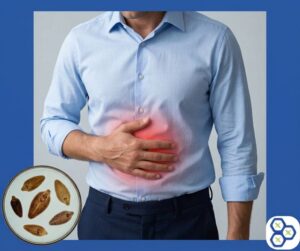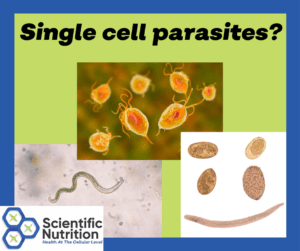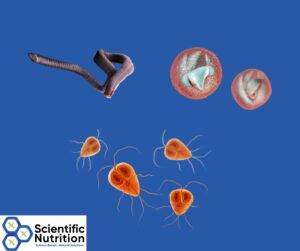

A human parasite protocol is essential for addressing underlying GI symptoms, fatigue, and systemic inflammation.
Most people assume parasitic infections are a distant problem restricted to international travel or contaminated municipal water in developing nations. In reality, intestinal and systemic organisms are far more common in North America than standard diagnostic testing suggests.
Because domestic pets, raw agricultural produce, undercooked meats, and environmental water sources host these organisms, humans contract them regularly. When a host carries a heavy burden of unwanted organisms, the body displays persistent, unexplained symptoms that standard blood work often overlooks.
Understanding how these hidden invaders operate within your digestive system, organs, and bloodstream is the first step toward reclaiming your energy, gut integrity, and cellular balance.
Key Takeaways for a Human Parasite Protocol
- Infections are widespread: Intestinal and systemic parasites affect millions in North America through food, water, and pets. Not just international travel.
- Diverse Organism Types: Parasites range from microscopic single-celled protozoa and blood/organ flukes to large roundworms and tapeworms.
- Standard Labs Fall Short: Routine stool tests frequently miss parasites because organisms do not shed eggs continuously or live deep within tissue.
- Cellular Prep is Critical: Opening liver/drainage pathways and checking mineral ratios via HTMA before cleansing prevents severe die-off reactions.
Table of Contents
- What Are Human Parasites and How Do They Affect Your Biochemistry?
- Category 1: Single-Celled Protozoa & Microscopic Invaders
- Category 2: Flukes (Trematodes)
- Category 3: Roundworms & Nematodes
- Category 4: Tapeworms (Cestodes)
- Why Standard Medical Tests Often Miss Parasitic Infections
- The HTMA & Mineral Connection: How to Choose the Right Human Parasite Protocol Cleanse
- Frequently Asked Questions (FAQ)
- Hair Analysis and Human Parasite Protocol to Take the First Step Toward Root-Cause Healing
What Are Human Parasites and How Do They Affect Your Biochemistry?
A parasite is an organism that lives on or inside a host organism, stealing nutrients at the host’s expense. Rather than causing immediate, acute illness, many long-term organisms adapt to survive undetected for years. We ALL need a good human parasite protocol cleanse a few times a year due to all of the exposure.
While stealing essential macro- and micronutrients, these invaders excrete metabolic wastes and heavy metal byproducts. They cause inflammatory toxins within your gut and bloodstream. This toxic output places an enormous strain on your liver, kidneys, and lymphatic drainage pathways. Over time, a heavy burden compromises gut mucosa, triggers autoimmune reactivity, and destabilizes vital mineral ratios like sodium, potassium, and copper.
Category 1: Single-Celled Protozoa & Microscopic Invaders
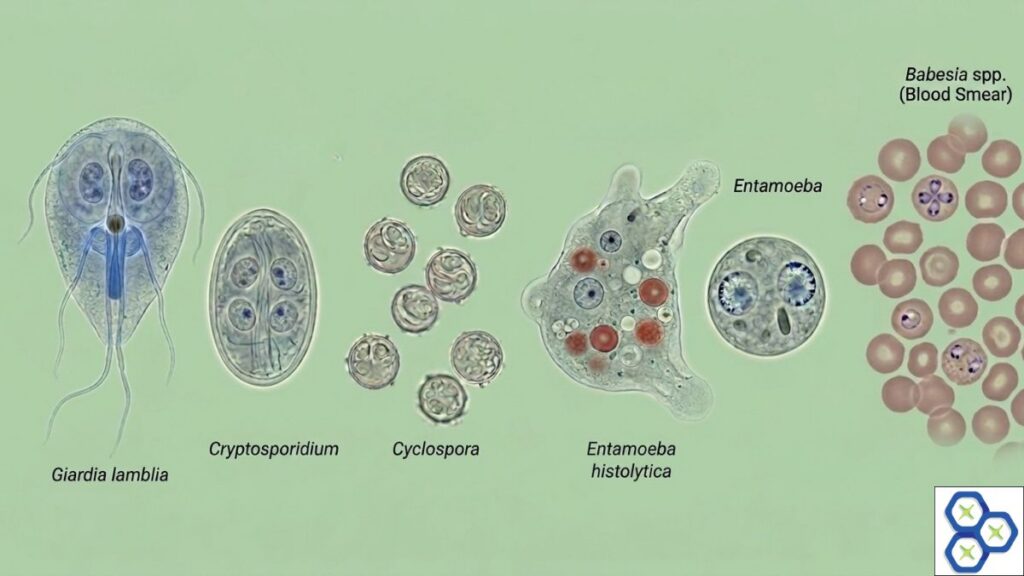
Protozoa are microscopic, single-celled organisms that multiply rapidly within the human body. They are invisible to the naked eye so they often go unnoticed while causing systemic inflammation and chronic digestive disturbances.
1. Giardia
Giardia lamblia is a microscopic organism found worldwide. It is most commonly transmitted through contaminated drinking water, recreational water, or unwashed produce. In my experience, I see clients who have developed digestive issues years later after camping, traveling, or daily exposure.
- Top Symptoms: Explosive watery diarrhea, greasy or floating stools, sulfurous belching, severe abdominal cramping, and rapid weight loss.
2. Cryptosporidium
Often referred to as “Crypto,” this microscopic protozoan features a tough outer shell that allows it to survive outside the body. It can live for long periods and resist chlorine disinfection in public swimming pools.
- Top Symptoms: Profuse watery diarrhea, stomach cramps, low-grade fever, dehydration, and nausea.
3. Amoebas (Entamoeba histolytica)
Amoebic infections primarily target the large intestine. If left unaddressed, amoebas can breach the intestinal barrier, enter the bloodstream, and form abscesses in the liver or other organs.
- Top Symptoms: Alternating bouts of constipation and diarrhea, bloody stools, right-sided abdominal pain, fatigue, and sudden fever.
4. Babesia
Babesia is a microscopic, malaria-like parasite that infects red blood cells. It is primarily transmitted by ticks. It is a common co-infection alongside Lyme disease that severely impacts cellular oxygen delivery and energy production.
- Top Symptoms: Drenching night sweats, air hunger (feeling like you cannot catch a deep breath), unexplained chills, cognitive fatigue, and hemolytic anemia.
5. Cryptolepis & Microscopic Co-Infections
Various opportunistic plant-borne and vector-borne single-celled organisms act as co-infections alongside protozoan burdens. They suppress immune function and overwhelm cellular antioxidants.
- Top Symptoms: Persistent low-grade joint pain, chronic fatigue, brain fog, unexplained skin rashes, and temperature fluctuations.
Category 2: Flukes (Trematodes)
Human Flukes are flat, leaf-shaped worms that attach themselves to specific organs or vascular networks using muscular suckers. They are notoriously resilient and can live inside human organs for decades.
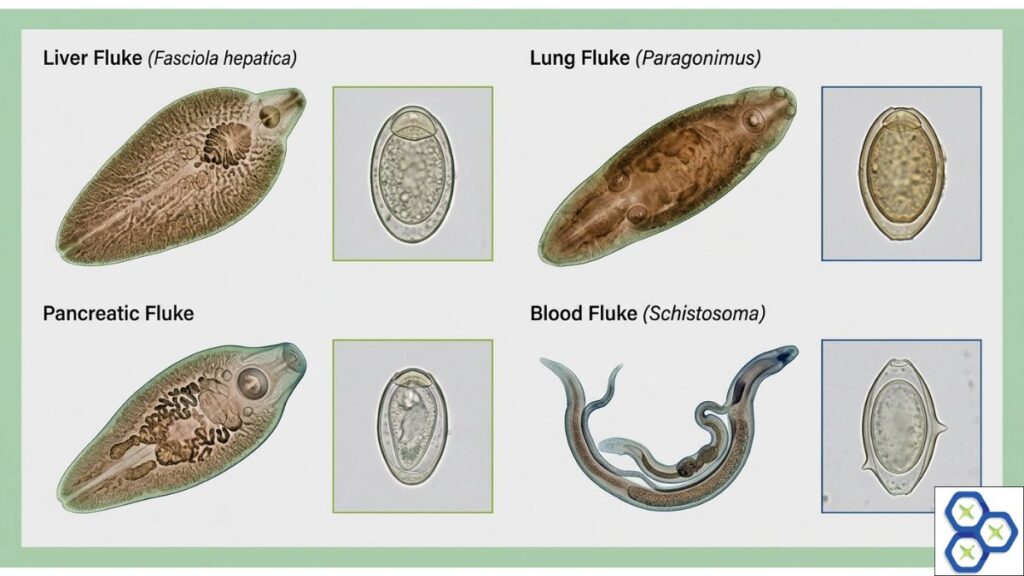
1. Liver Flukes (Fasciola hepatica / Clonorchis sinensis)
Ingested through contaminated aquatic plants like watercress or undercooked freshwater fish. Liver flukes inhabit the bile ducts and gallbladder. My clients who are feeling chronic right-side rib pain or whose bile is too thick frequently have unaddressed, high biliary fluke numbers.
- Top Symptoms: Pain under the right rib cage, sluggish digestion, gallbladder inflammation, jaundice (yellowing skin/eyes), and intolerance to healthy fats.
2. Pancreatic Flukes (Eurytrema pancreaticum)
Pancreatic flukes colonize the pancreatic ducts, disrupting digestive enzyme production and disturbing blood sugar regulation mechanisms.
- Top Symptoms: Mid-abdominal radiating pain, severe bloating after meals, poor fat absorption, chronic nausea, and sudden blood sugar swings.
3. Intestinal Flukes (Fasciolopsis buski)
The largest fluke infecting humans, Fasciolopsis buski attaches to the wall of the small intestine after ingestion of contaminated water plants.
- Top Symptoms: Deep abdominal pain, persistent morning loose stools, facial edema (swelling), nutrient malabsorption, and toxic allergic reactions.
4. Blood Flukes (Schistosoma)
Blood flukes enter the body through direct skin contact in fresh water. They migrate into the mesenteric veins surrounding the intestines or the vascular networks of the urinary bladder.
- Top Symptoms: Chronic blood in the urine or stool, enlarged liver/spleen, pelvic pain, skin rash (“swimmer’s itch”), and persistent anemia.
5. Lung Flukes (Paragonimus)
Contracted by consuming raw or undercooked freshwater crabs and crayfish. These lung flukes migrate through the intestinal wall and diaphragm to settle inside lung tissue.
- Top Symptoms: Chronic dry or bloody cough, chest tightness, recurrent bronchitis-like symptoms, fever, and shortness of breath.
6. Lymph Flukes & Systemic Trematodes
Fluke larvae that enter the lymphatic system can obstruct lymph nodes. They block cellular waste removal and lead to severe tissue swelling.
- Top Symptoms: Swollen lymph nodes, localized fluid retention (lymphedema), heavy limbs, chronic skin congestion, and profound fatigue.
Category 3: Roundworms & Nematodes
Roundworms are multi-celled, cylindrical worms. They vary in size from microscopic threads to species that grow over twelve inches long inside the human intestinal tract.
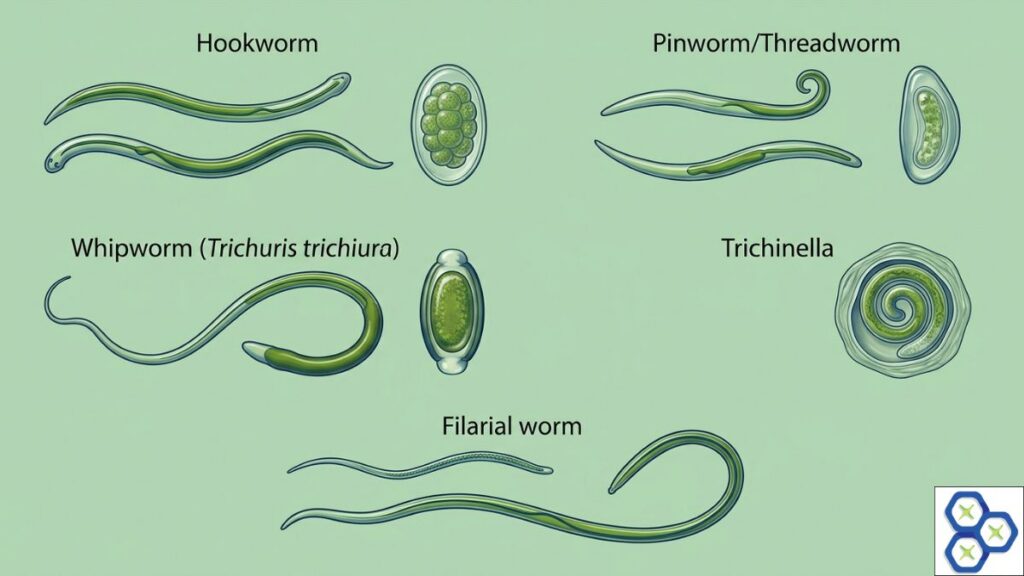
1. Hookworms (Ancylostoma duodenale / Necator americanus)
Hookworm larvae live in moist soil and penetrate intact human skin (often through bare feet). Once inside, they travel through the lungs to the small intestine. There they anchor into the mucosal wall and feed on blood.
For a detailed breakdown of how hookworms migrate and impact digestion, read our dedicated article on what parasites can humans get.
- Top Symptoms: Unexplained iron-deficiency anemia, ground itch (skin irritation at entry site), dry cough, abdominal pain, and dark, tarry stools.
2. Threadworms / Pinworms (Enterobius vermicularis)
Pinworms are the most common worm infection in North America. More so among young children and households with pets. Female pinworms migrate to the anal area at night to lay thousands of microscopic eggs.
- Top Symptoms: Intense anal itching (especially at night), restless sleep, grinding teeth during sleep (bruxism), irritability, and bedwetting.
3. Whipworms (Trichuris trichiura)
Whipworms infect the large intestine, embedding their thin front ends into the lining of the cecum and colon.
- Top Symptoms: Frequent painful urges to defecate, mucus-laden stools, chronic diarrhea, rectal prolapse (in severe cases), and growth delays in children.
4. Trichinosis (Trichinella spiralis)
Contracted by consuming undercooked meat (particularly wild game or pork) infected with encysted larvae. Trichinella larvae migrate from the gut into human muscle tissue.
- Top Symptoms: Early nausea and diarrhea followed by muscle soreness, swollen eyelids, high fever, joint pain, and light sensitivity.
5. Filarial Worms
Transmitted by blood-feeding insects like mosquitoes, filarial nematodes inhabit blood vessels and lymphatic tissues. They block fluid circulation.
- Top Symptoms: Severe swelling in arms or legs, thickened skin texture, fever, localized heat, and compromised lymphatic drainage.
Category 4: Tapeworms (Cestodes)
Tapeworms are segmented flatworms that live inside the intestinal tract. They attach to the intestinal wall using hooks or suckers. Slowly, they absorb nutrients directly through their skin.
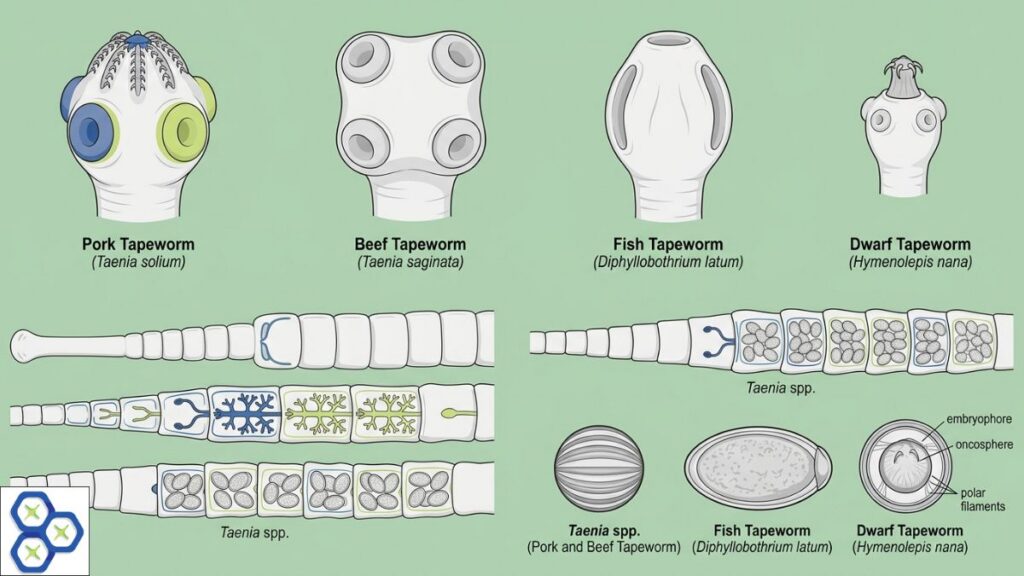
1. Fish Tapeworms (Diphyllobothrium latum)
Contracted through raw or undercooked freshwater fish (including sushi). The fish tapeworm can grow up to 30 feet long inside the human intestine. It consumes vast amounts of Vitamin B12, causing severe neurological and hematological symptoms.
- Top Symptoms: Severe Vitamin B12 deficiency anemia, numbness or tingling in hands and feet, constant hunger, weight loss, and visible worm segments in stool.
2. Beef & Pork Tapeworms (Taenia saginata / Taenia solium)
Ingested via undercooked beef or pork, these tapeworms steal essential amino acids and minerals. All the while shedding egg-filled segments out through the digestive tract.
- Top Symptoms: Dull abdominal aching, sudden loss of appetite or ravenous hunger, nausea, weakness, and passage of ribbon-like segments.
Why Standard Medical Tests Often Miss Parasitic Infections and the Need for the Human Parasite Protocol
Many clients ask why their routine stool tests or blood panels came back completely normal despite experiencing classic parasite symptoms. Standard lab diagnostics rely on finding live larvae or intact eggs in a small stool sample under a microscope.
However, parasites do not shed eggs continuously. Furthermore, organisms embedded deep within organs, muscle tissue, or bile ducts will never appear on a standard stool culture.
According to public health data published by the Centers for Disease Control and Prevention, parasitic infections frequently present as non-specific, systemic conditions that evade standard screening methods.
Additionally, academic research indexed in the National Institutes of Health PubMed Database emphasizes that intestinal parasites induce chronic intestinal inflammation and hyper-permeability (leaky gut), altering host immune function long before acute clinical detection occurs.
The HTMA & Mineral Connection: How to Choose the Right Human Parasite Protocol Cleanse
Attempting an aggressive parasite protocol without first opening drainage pathways and assessing cellular energy levels is a common mistake. When parasites die, they release heavy metals (like mercury and lead), ammonia, and inflammatory proteins.
If your liver, kidneys, and bowels are not moving properly, you will experience severe Herxheimer (die-off) reactions. Using Hair Tissue Mineral Analysis (HTMA), we evaluate your cellular vitality before starting a protocol.
- Sodium-to-Potassium Ratio (Na/K): Reveals adrenal reserves and your body’s ability to mount an immune response against invaders.
- Calcium-to-Potassium Ratio (Ca/K): Indicates cellular thyroid function and metabolic speed.
- Copper Dynamics: Unbound, bio-unavailable copper creates an environment where yeast, mold, and parasites flourish. Balancing bio-available copper acts as a natural antimicrobial barrier.
In my coaching, I never recommend jumping into a heavy parasite protocol. You first need to verify that your cellular energy and drainage pathways can handle the clearing process safely.
Human Parasite Protocol (FAQ)
Humans contract parasites daily through contaminated tap or well water, unwashed agricultural produce, undercooked meats or sushi, walking barefoot on soil, and close contact with domestic pets. We all need regular human parasite protocol cleanses to get healthy and remain well.
During a full moon, human melatonin production drops while serotonin levels rise. Serotonin increases parasite motility and reproductive activity. This is why symptoms like grinding teeth, skin itching, and insomnia often peak during a full moon.
A thorough protocol typically spans 30 to 60 days at minimum. Incorporating targeted rest cycles between phases helps target newly hatching eggs and larvae effectively.
Yes. Parasites absorb heavy metals like lead and aluminum within their own tissues. When they die during a cleanse, these toxic metals are released back into your digestive system. This is why binding agents and HTMA mineral support are essential.
Hair Analysis and a Human Parasite Protocol to Take the First Step Toward Root-Cause Healing
You do not have to live with unexplained fatigue, chronic bloating, brain fog, or persistent digestive discomfort. By identifying the underlying imbalances that allow parasites to thrive, you can restore your gut barrier, balance your essential minerals, and regain your daily vitality.
If you are ready to stop guessing with your health and want a tailored, step-by-step human parasite protocol strategy to support your body naturally, let’s connect.
Click Here to Book Your Complimentary Health Assessment Call and discover what your unique biochemistry needs to heal from the inside out.