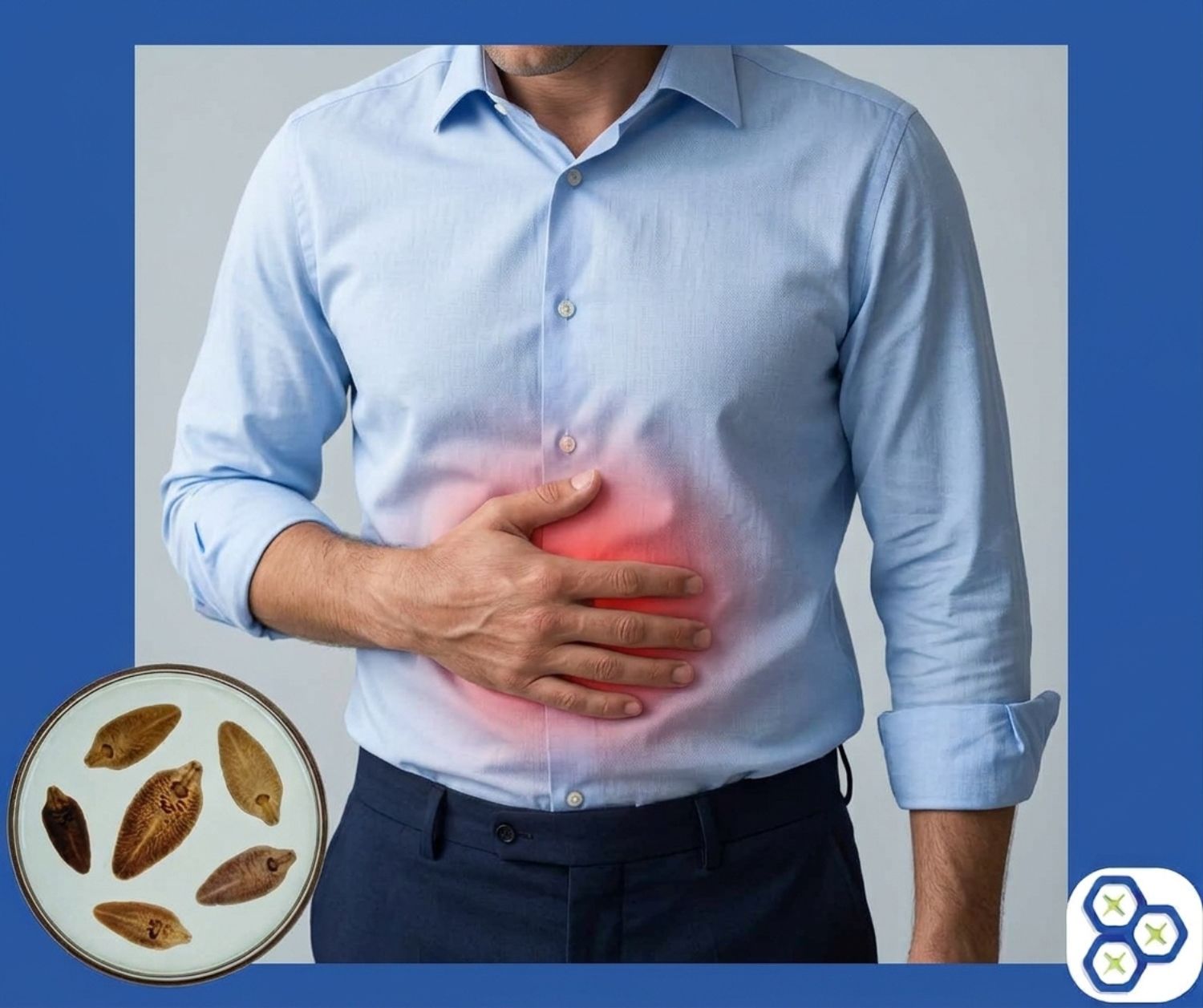
If you are dealing with unexplained digestive issues, chronic fatigue, or stubborn skin flare-ups, human flukes may be the hidden root cause standard lab tests are missing.
These specialized parasitic flatworms can quietly inhabit host tissues for years, draining essential nutrients and compounding systemic inflammation.
In this guide, we break down the different types of human flukes, their transmission sources, and how to safely eliminate them without triggering severe detox reactions.
Key Takeaways
- Multiple Types: Human flukes include liver, blood, lung, and intestinal species, each targeting distinct organ systems.
- Toxic Sponge: Flukes can absorb and retain up to 10x their body weight in heavy metals, making drainage protocols essential.
- Lyme Bacteria Shield: Borrelia bacteria often shelter inside flukes, causing Lyme recurrences if parasites are not addressed systematically.
- Layered Protocols: Utilizing targeted protocols over several months prevents severe die-off reactions and allows nutrient recovery.
Table Of Contents
- What Are Human Flukes and Parasitic Trematodes?
- Human Fluke Species: Types, Transmission Sources, and Symptoms
- The Hidden Toxic Connection: Human Flukes, Heavy Metals, and Lyme
- Heavy Metal Accumulation
- The Lyme Disease Bacteria Shield
- The Safe Path to Cleansing Human Flukes: Why Drainage Matters First
- Regaining Cellular Health: The Multi-Month Layered Approach
- Hair Analysis and Restoring Your Cellular Health
What Are Human Flukes and Parasitic Trematodes?
When exploring the complex world of internal parasites, human flukes (trematodes) represent one of the most stealthy and damaging categories of organisms. These flat, leaf-shaped worms can infect various tissues and organs. They quietly disrupt metabolic function, leaching essential minerals and driving systemic inflammation.
Unlike basic digestive imbalances, fluke infestations often go undetected for years on routine lab panels. All the while causing complex, chronic symptoms. Understanding how human flukes operate within the body is the first step toward restoring baseline energy, balancing cellular minerals, and regaining overall vitality.
Human Fluke Species: Types, Transmission Sources, and Symptoms
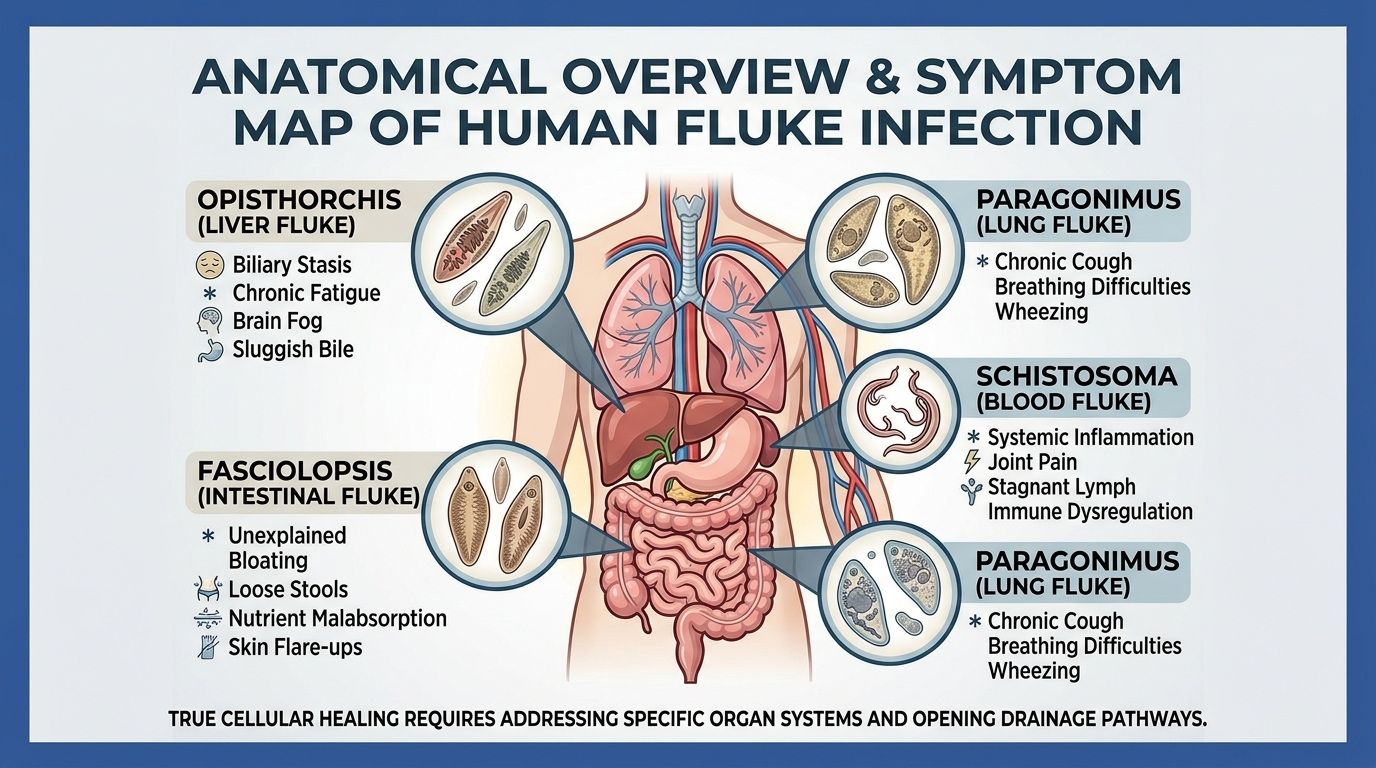
Flukes are generally categorized by the specific host organ systems they prefer to inhabit.
As outlined in our comprehensive overview of internal parasite categories guide to parasite types and symptoms, different species produce distinct physical reactions:
- Liver Flukes (Fasciola hepatica, Clonorchis sinensis):
- Sources: Ingestion of contaminated freshwater plants (like watercress), undercooked freshwater fish, or seafoods (conch, etc.).
- Symptoms: Right upper quadrant abdominal pain, biliary obstruction, digestive distress, hives, and chronic fatigue.
- Blood Flukes (Schistosoma species):
- Sources: Swimming or wading in contaminated freshwater where larvae penetrate the skin.
- Symptoms: Skin irritation (“swimmer’s itch“), fever, chills, liver enlargement, and chronic bladder or intestinal inflammation.
- Lung Flukes (Paragonimus species):
- Sources: Eating undercooked freshwater crabs or crayfish.
- Symptoms: Persistent cough, rusty or bloody sputum, chest pain, and breathing difficulty that mimics chronic respiratory conditions.
- Intestinal Flukes (Fasciolopsis buski):
- Sources: Consuming unwashed aquatic plants (kelp) or contaminated drinking water.
- Symptoms: Persistent bloating, diarrhea, abdominal cramping, malabsorption, and unexplained weight fluctuations.
The Hidden Toxic Connection: Human Flukes, Heavy Metals, and Lyme
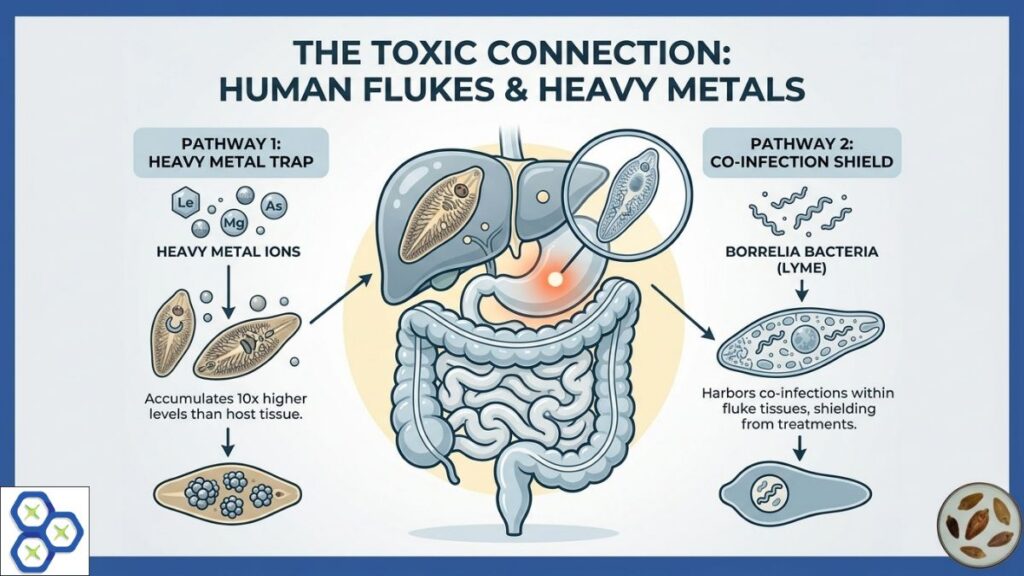
One of the most overlooked aspects of parasite recovery is how human flukes act as physical reservoirs for environmental toxins.

Heavy Metal Accumulation
Research published by the National Center for Biotechnology Information (NCBI) confirms that parasitic helminths can accumulate high concentrations of toxic metals from their host.
In fact, flukes can hold up to 10 times their own body weight in heavy metals such as lead, mercury, and cadmium. When a parasite cleanse is initiated too aggressively without proper binder support, these stored metals are released rapidly into circulation, triggering intense cellular toxicity and flare-ups.
The Lyme Disease Bacteria Shield
For individuals navigating chronic Lyme Disease, addressing human flukes is a critical piece of the recovery puzzle. According to research documented by the Centers for Disease Control and Prevention (CDC), vector-borne bacteria can complicate chronic illness treatment. Specifically, Lyme-causing bacteria (Borrelia burgdorferi) frequently hide inside the protective body structures of parasitic flukes.
While a client undergoes antibiotic or antimicrobial therapy, the bacteria remain sheltered inside the living parasite. Once the course of medication finishes, the surviving parasites release the bacteria back into the bloodstream. This leads to a frustrating recurrence of Lyme symptoms. Without cleaning out parasites, you won’t be able to eliminate the Lyme Disease.
The Safe Path to Cleansing Human Flukes: Why Drainage Matters First
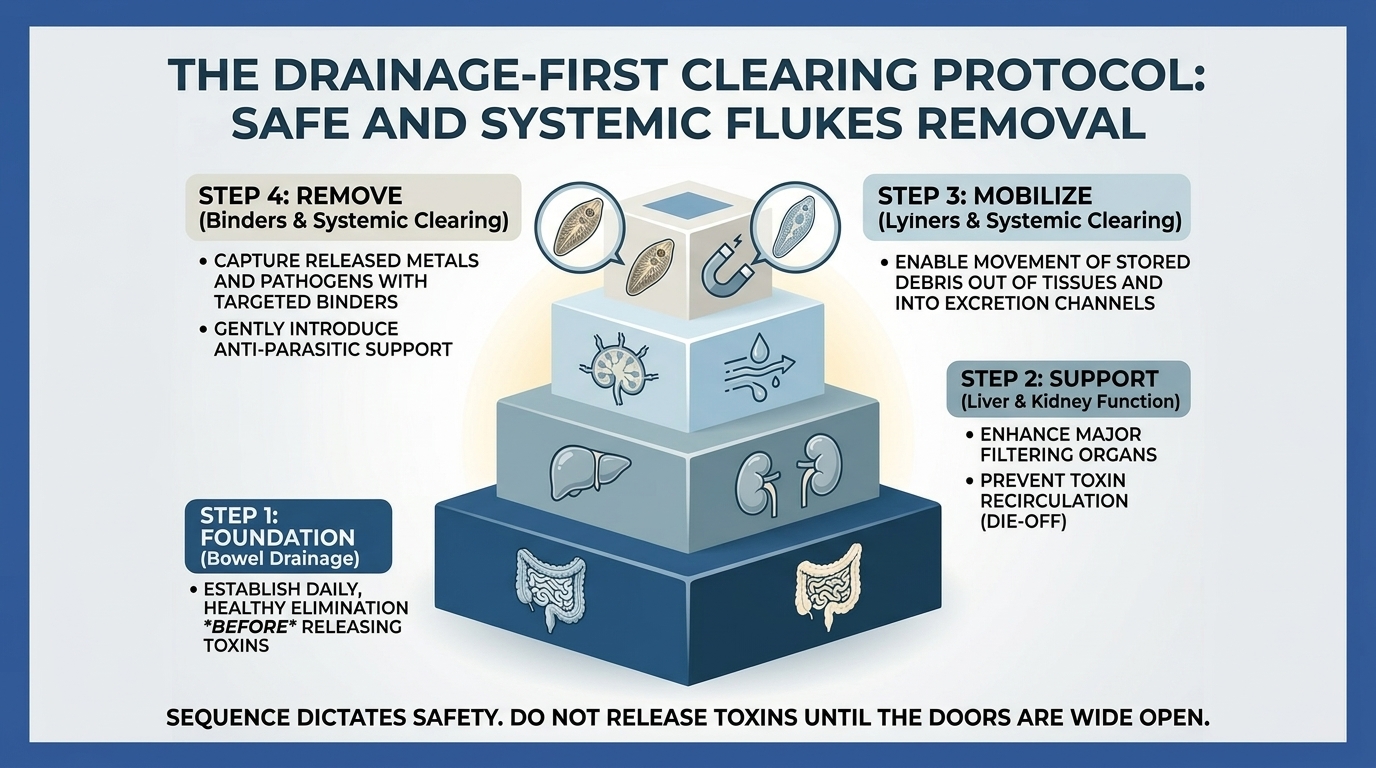
Why sequence is everything: Opening drainage pathways is the non-negotiable first step to ensure your body can safely eliminate released heavy metals and pathogens when clearing human flukes.
Eliminating parasites should never feel like a violent or punishing process for your body.
The most common mistake people make is starting a harsh, high-dose antiparasitic herbal regimen without first opening their primary elimination pathways (liver, gallbladder, colon, kidneys, and lymphatic system).
If these drainage pathways are clogged or sluggish, mass parasite die-off creates a severe toxic backup. This can result in intense Herxheimer reactions, including flu-like symptoms, severe brain fog, skin breakouts, and extreme fatigue. Opening pathways first ensures that toxins, heavy metals, and waste products flow out of the body smoothly and comfortably.
Regaining Cellular Health: The Multi-Month Layered Approach
To safely clear parasites without overwhelming your system, you need a structured, patient approach. In my practice, I use 6 specialized protocols administered strategically over several months.
Rather than attempting to destroy every organism simultaneously, this multi-month layered strategy:
- Focuses on One Category at a Time: Systematically eliminates specific parasite classes (from microscopic protozoa to flukes and larger organisms) in an order the body can comfortably manage.
- Prevents Mass Die-Off Symptoms: Keeps detox reactions minimal so you can maintain your daily routine and quality of life.
- Restores Nutrient Absorption: Works alongside Hair Tissue Mineral Analysis (HTMA) to replenish essential cellular minerals lost during chronic infection, rebuilding your foundational energy.
If you suspect underlying parasites may be holding back your health, you can review our foundational article on understanding basic parasite biology what parasites are and how they affect your body to learn more about the biological basics.
Hair Analysis and Restoring Your Cellular Health
You do not have to navigate complex digestive symptoms, chronic fatigue, or parasite cleansing alone. By pairing targeted mineral balancing with a gentle, pathway-first approach, you can eliminate unwanted organisms safely and reclaim your vital energy.
Book a Complimentary Health Consultation Today to discuss your unique symptoms and explore a customized, comfortable protocol tailored for your body.