
Do you wake up feeling completely exhausted, only to find yourself “tired and wired” when your head hits the pillow at night?
If you are battling stubborn midsection weight, fatigue, brain fog, and a relentless sense of overwhelm, your body may be trapped in a chronic stress loop. To break free, you must learn how to lower cortisol naturally.
Cortisol is your body’s primary stress hormone, built for survival. However, modern life keeps this biological alarm system running 24/7. You need stress hormone management.
Chronic stress has become an epidemic, leaving millions searching for answers on how to lower cortisol naturally. As the body’s primary stress hormone, cortisol plays a vital role in your survival mechanism. However, when the alarm system stays turned on indefinitely, elevated levels can disrupt your sleep, impair digestion, cause brain fog, fatigue, a relentless sense of overwhelm, and drive stubborn mid belly weight gain.
In this comprehensive 2026 guide, we will break down 15 clinically proven, natural strategies to reset your nervous system and lower cortisol levels for good.
Key Takeaways:
- Chronic Elevation is Harmful: Consistently high cortisol levels disrupt sleep, metabolism, immunity, and mental clarity.
- Lifestyle over Quick Fixes: Deep breathing, consistent sleep schedules, and setting boundaries are foundational for natural stress relief.
- Nutrient Density Matters: Incorporating specific foods that lower cortisol levels helps stabilize blood sugar and mitigate physical stress.
- Stop Guessing, Start Testing: A Hair Tissue Mineral Analysis (HTMA) offers a cellular look at adrenal function and cellular stress patterns.
What is Cortisol? Understanding Adrenal Function
Cortisol is a vital steroid hormone produced by your adrenal glands, two small organs that sit right on top of your kidneys. Often dubbed the “stress hormone,” it plays a foundational role in your body’s survival mechanisms.
Beyond managing your fight-or-flight response, it regulates blood pressure, controls blood sugar, dampens inflammation, and governs how your body metabolizes carbohydrates, fats, and proteins.
When your brain perceives a threat, whether it’s a physical danger or a looming work deadline, it signals your adrenal glands to flood your system with cortisol, prioritizing immediate survival over nonessential functions like digestion or deep sleep.
While this system is lifesaving in acute situations, modern life subjects us to chronic, low-grade pressures. Over time, this unrelenting demand can exhaust your adrenal function, making it difficult to keep your biochemistry stable.
Warning Signs of High Cortisol & Chronic Stress Symptoms
When your body keeps the stress dial turned up permanently, circulating hormone levels remain high, leading to a state of chronic alarm. Recognizing the physical and emotional shifts is the first step toward reclaiming your health.
Physical Indicators of Stress
- Stubborn Midsection Weight Gain: High levels signal your body to store visceral fat around vital organs, particularly in the abdomen, closely linking chronic stress and weight gain.
- Disrupted Sleep Cycles: Feeling “tired but wired” at bedtime, or waking up frequently between 1:00 AM and 3:00 AM.
- Immune Depletion: Catching every cold or virus that goes around because your body’s natural defense mechanisms are chronically suppressed.
Cognitive and Emotional Red Flags
- Brain Fog and Low Focus: Difficulty concentrating, forgetfulness, and a lack of mental clarity.
- Irritability and Anxiety: A perpetually low threshold for dealing with minor everyday frustrations.
The Cortisol Circadian Rhythm: Morning vs. Evening Balance
Your body relies on a strict internal clock known as the circadian rhythm to orchestrate hormone secretion. Under healthy conditions, your daily curve should look like a gentle ski slope.
In the morning, your body triggers a sharp spike, called the Cortisol Awakening Response (CAR), within 30 to 45 minutes of waking up. This natural surge provides the focused energy required to get out of bed and start your day.
As the hours progress, levels should steadily decline, reaching their lowest point around midnight to allow melatonin (your sleep hormone) to take over. When stress breaks this rhythm, the curve flips. You might experience bottomed-out levels in the morning, leaving you exhausted and dependent on caffeine, followed by a surge late at night that keeps your mind racing.

15 Science-Backed Ways to Lower Cortisol Naturally
If you want to protect your adrenals from long-term exhaustion, you must introduce sustainable lifestyle shifts. You can strategically adapt your daily routine to lower cortisol naturally without relying on aggressive interventions.
1. Optimize Your Mineral Intake
Before adding complex supplements, prioritize basic mineral balance. Focusing on bioavailable whole-food sources of magnesium, potassium, and unrefined sea salt. This gives your adrenal glands the raw materials they need to regulate stress responses effectively.
2. Practice Strategic Morning Light Exposure
Step outside into direct sunlight for 10 to 15 minutes within an hour of waking up. This practice anchors your circadian rhythm. You are supporting a healthy morning spike so your body can naturally wind down later in the evening.
3. Implement Nervous System Down-Regulation
Dedicate five minutes twice a day to somatic breathwork or box breathing. This is simply inhaling, holding, exhaling, and holding for equal counts of four. This actively shifts your body out of sympathetic drive and into a restorative parasympathetic state.
4. Adjust the Intensity of Your Workouts
When your body is already depleted, grueling high-intensity interval training (HIIT) can backfire. It sends stress hormones through the roof. Shift your focus to low-impact movement like walking, restorative yoga, or heavy strength training. Ensure you take ample rest between sets to help lower cortisol naturally.
5. Establish a Digital Curfew
Turn off your phone, laptop, and television at least two hours before bedtime. Blue light suppresses melatonin production. This is what keeps your brain alert and artificially inflates your nighttime stress responses.
6. Stabilize Blood Sugar with Protein-Rich Meals
When blood sugar crashes, your adrenals instantly produce a spike of cortisol to mobilize glucose stores. Prevent these reactive hormone spikes by eating high-quality protein, fiber, and healthy fats every 3 to 4 hours, especially at breakfast.
7. Avoid Caffeine on an Empty Stomach
Caffeine is a direct stimulant to the adrenal cortex. Drinking coffee before eating forces an unbuffered surge of stress hormones into your system. Always pair your morning beverage with or after a solid meal!
8. Incorporate Targeted Adaptogens
Adaptogenic herbs like Ashwagandha and Rhodiola Rosea help modulate the hypothalamic-pituitary-adrenal (HPA) axis. They improve your resilience to stress by smoothing out dramatic hormonal highs and lows. It makes them some of the best supplements to lower cortisol.
9. Replenish with Adrenal Cocktails
An adrenal cocktail is typically a combination of whole-food vitamin C, potassium-rich liquids, and a pinch of sea salt. It nourishes the adrenals directly without triggering digestive stress.
10. Maximize Omega-3 Fatty Acid Intake
High-quality omega-3 fatty acids found in wild-caught seafood help lower system-wide physical inflammation. This reduces the baseline demand on your liver to secrete inflammatory-fighting cortisol. Try exploring targeted, nutrient-dense foods that lower cortisol levels, like sardines, dark leafy greens, and avocados.
11. Support Gut Health and Microbiome Diversity
The gut and brain communicate constantly via the vagus nerve. Dysbiosis and gut wall permeability act as hidden internal stressors. It forces a constant elevation of immune and stress defenses.
12. Eliminate Inflammatory Seed Oils and Refined Sugars
Processed foods induce oxidative stress at a cellular level. Try cleaning up your diet and focusing on anti-inflammatory, whole foods. You will remove a major physical trigger of sustained cortisol production.
13. Practice Earthing or Grounding in Nature
Physically connecting with the earth by walking barefoot on grass, soil, or sand is so beneficial. It has been clinically shown to balance autonomic nervous system activity. It helps to smoothly lower cortisol naturally through grounding.
14. Establish Strict Energetic Boundaries
You cannot supplement your way out of a lifestyle that keeps you in a state of hyper-vigilance. Learning to say “no” and scheduling unstructured, unproductive downtime is foundational to healing.
15. Track Progress with Longitudinal Testing
Hormone health is dynamic. Consistently evaluating your status through functional tracking ensures you are supporting your body accurately rather than taking supplements blindly.
What Doesn’t Work: Debunking Stress Relief Myths
When looking for ways to lower cortisol naturally, it is easy to fall into common wellness traps that increase the stress burden on your body. To read more about the clinical impact of elevated cortisol on systemic health, explore the comprehensive review on The National Center for Biotechnology Information (NCBI).
- Aggressive Fasting Protocols: While intermittent fasting works well for some, skipping meals when your adrenals are already compromised triggers a survival response. Your body will deliberately break down muscle tissue to elevate blood sugar, causing stress hormones to spike.
- Over-Caffeinating to Fix Fatigue: Relying on multiple cups of coffee to push through morning fatigue acts like whipping a tired horse. It forces exhausted adrenal glands to pump out temporary energy, worsening long-term depletion.
- Escapist High-Stimulus “Relaxation”: Spending hours scrolling social media or watching intense, fast-paced television might feel like downtime. The constant visual stimulus, however, keeps your nervous system mildly activated.
When to Consult a Functional Health Professional
While implementing lifestyle changes is a powerful way to support your well-being, true recovery requires a personalized approach. Guessing which supplements or dietary protocols to use can often prolong your healing journey or cause further mineral imbalances.
Working with us allows you to bypass the guesswork. By using objective data from functional testing, we can uncover the root cause of your fatigue. We will design a bio-individual roadmap to help you manage adrenal burnout and lower cortisol naturally and safely.
How Hair Tissue Mineral Analysis (HTMA) Maps Adrenal Burnout to Lower Cortisol Naturally
Standard blood tests only capture a brief snapshot of your hormones at the exact minute your blood is drawn. Because hormone levels fluctuate wildly throughout the day, a single blood draw rarely tells the whole story of cellular exhaustion. This is where Hair Tissue Mineral Analysis (HTMA) becomes a crucial diagnostic tool.
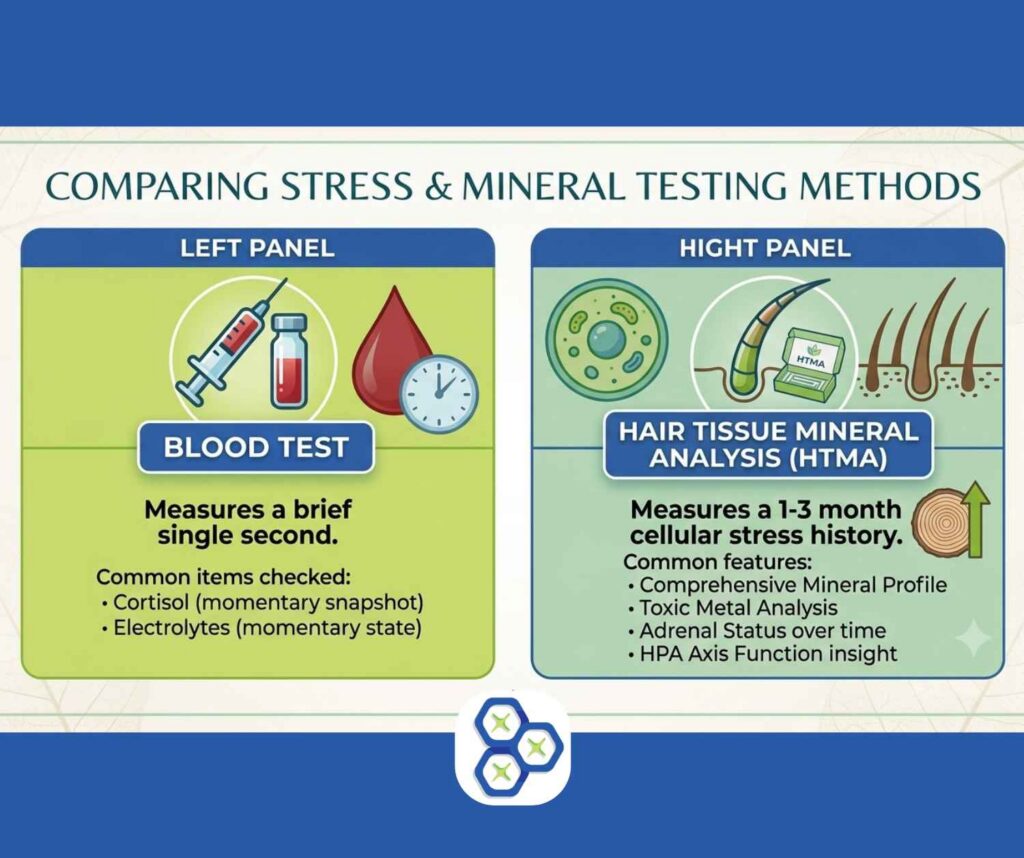
Your hair accumulates minerals over a one to three-month period, providing a stable blueprint of your cellular activity. In an HTMA profile, we look closely at specific mineral relationships, specifically the sodium-to-magnesium (Na/Mg) ratio and the cellular vitality markers. This can evaluate exactly how your adrenal glands are performing.
If your sodium is depleted relative to magnesium, it indicates that your adrenals are tired and struggling to maintain blood pressure and fluid balance. Furthermore, an HTMA uncovers long-term cellular stress patterns, mineral deficiencies, and the specific stage of adrenal exhaustion your body is navigating. It measures if cortisol is being excreted in excess by tracking how minerals are being lost or retained at the cellular level.
By mapping your unique mineral pattern, we can identify whether you are in an acute “alarm” state or entering deep burnout, allowing us to create a targeted protocol to restore homeostasis. Learn more about the science of cellular mineral balancing and its role in modern clinical nutrition at hairanalysisnutrition.com/blog.
Frequently Asked Questions (FAQ)
How do I know if my cortisol is high or low?
Symptoms like belly fat and sleep issues suggest high cortisol. Advanced stages of burnout can cause your morning cortisol levels to drop too low. A cellular test like HTMA provides an accurate view of your true adrenal status.
Can a mineral deficiency cause chronic stress?
Yes, a severe depletion of cell-level magnesium or potassium makes your nervous system highly reactive. This means even minor daily stressors trigger prolonged hormonal spikes.
Hair Analysis and Lowering Cortisol Naturally
You do not have to accept chronic exhaustion, brain fog, and poor sleep as your normal baseline. Your body is incredibly resilient, but it requires the right environmental signals and cellular support to heal from chronic burnout.
If you are ready to stop guessing and start tracking your unique biochemistry, taking the next step with an HTMA can give you the exact clarity you need. Let’s work together to balance your minerals, optimize your nervous system, and lower cortisol naturally.