For over five decades, a dietary myth has compromised the metabolic health of millions. The “low-fat” dogma that emerged in the 1970s didn’t just remove calories; it removed the essential building blocks for our most vital organs.
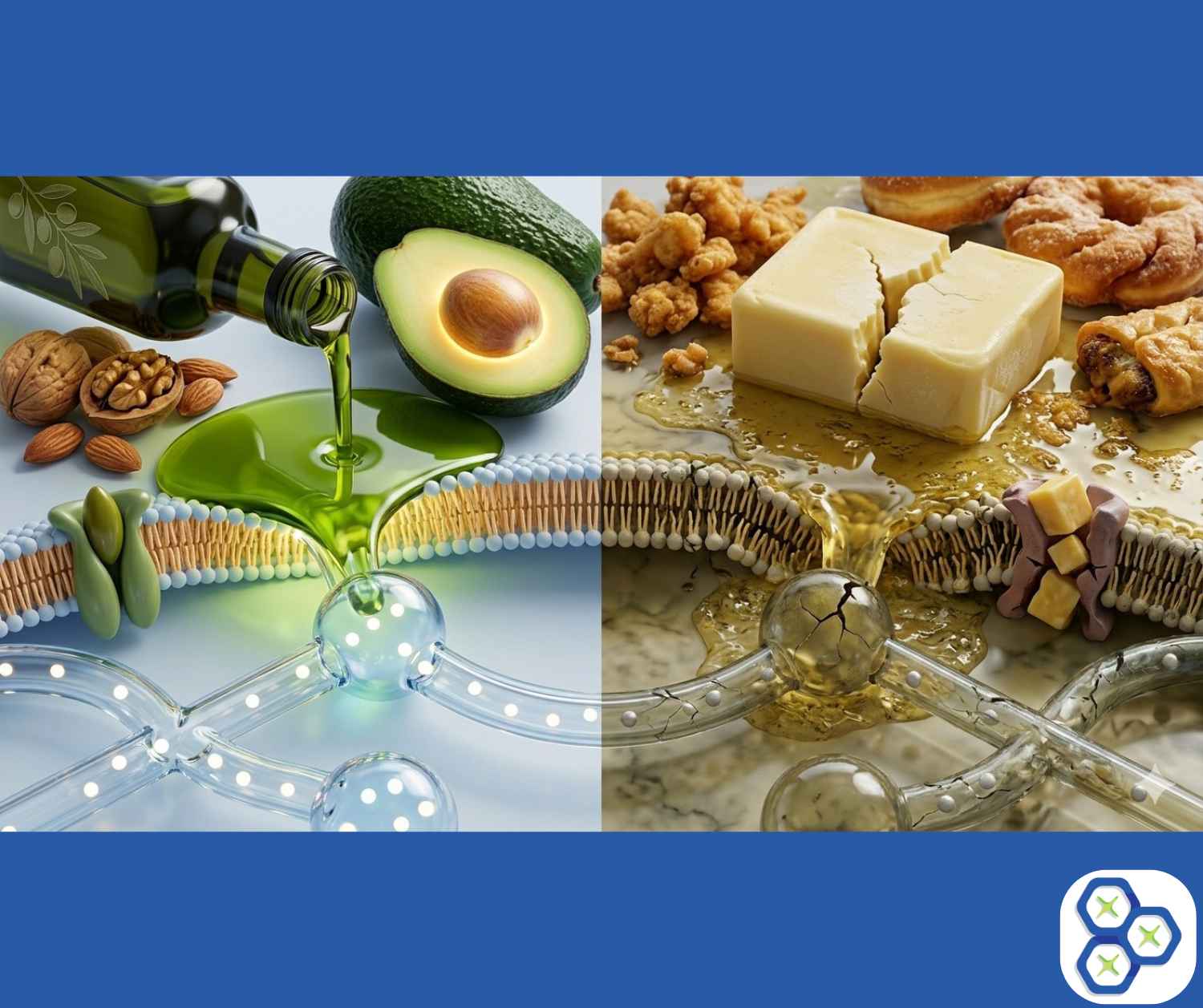
As natural fats were stripped from the American diet, they were replaced by fake fats like margarine, shortening, and high-fructose corn syrup. This era also saw a rise in environmental toxins, including widespread glyphosate exposure, which further congested our cellular pathways.
The result was not a thinner population, but one struggling with “Metabolic Gridlock,” systemic inflammation, and a sharp rise in cognitive decline.
The 60% Rule: Why Your Brain is a Lipid Organ
While many prioritize protein for muscle growth, the human brain is actually the “fattest” organ in the body. Approximately 60% of the brain’s dry weight is comprised of lipids (fats). These fats are not merely stored energy; they are the structural substrate of cell membranes and the insulation (myelin) that allows for rapid neural communication.
When the body lacks high-quality, stable fats, the brain’s “wiring” becomes vulnerable to oxidative stress, essentially “rusting” from the inside out. These fats are essential for the structural integrity of your brain cells and the speed of neurotransmission. High-quality fats provide a protective shield against cognitive decline.
Research published by Harvard Health highlights that monounsaturated and polyunsaturated fats are critical for neuroprotection, potentially offering an abundance of healthy fats. These fats offer a critical defense against Alzheimer’s disease and other forms of dementia. By maintaining the integrity of the blood-brain barrier and reducing neuroinflammation, high-quality lipids serve as the ultimate insurance policy for long-term cognitive health.
Clinical Case Study: Reversing “Metabolic Gridlock”
Experience shows that the right fuel can reverse even the most stubborn health challenges. I recently worked with a client who had strictly followed low-fat guidelines for years, yet they were struggling with:
- Type 2 Diabetes
- Persistent Brain Fog
- Unresponsive Weight Gain
By utilizing Hair Trace Mineral Analysis (HTMA), we identified that her “slow” metabolic rate required a very specific fat-to-protein ratio. We removed “fake” spreads and inflammatory seed oils, replacing them with stable animal fats and roasted nut butters.
The result was a total biochemical reset. Within months, their mineral imbalances corrected, their cognition sharpened, and their blood markers improved to the point that they were no longer classified as Type 2 diabetic. Her doctor had to call her to tell her to discontinue Metformin!
This transformation highlights that weight gain is often driven by excess sugar and processed carbohydrates, not healthy fats.
Understanding the 3 Types of Fats
To practice true cellular stewardship, you must understand the chemical stability of the fats you consume.
1. Saturated Fats: The Stable Foundations
These fats have no double bonds between the carbon atoms, meaning they are “saturated” with hydrogen. Because of this straight-chain structure, they pack together tightly and are typically solid at room temperature. Saturated fats are solid at room temperature and highly resistant to oxidation, and they do not go rancid easily, even when heated. They include:
-
Animal Sources: Butter, ghee, lard, tallow, and fatty cuts of beef or pork.
-
Plant Sources: Coconut oil and cocoa butter.
-
Dairy: Whole milk, cream, and full-fat cheeses.
- Clinical Benefit: They provide a sturdy architecture for cell membranes and a clean-burning fuel source for the heart and brain.
2. Monounsaturated Fats: The Fluid Support
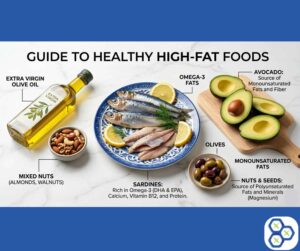
Monounsaturated fats contain one double bond in their fatty acid chain. This single “kink” in the chain prevents them from packing tightly, so they are generally liquid at room temperature but may begin to solidify when refrigerated.
-
Oils: Olive oil (the primary source in the Mediterranean diet), avocado oil, and peanut oil.
-
Nuts and Seeds: Almonds, cashews, pecans, and pumpkin seeds.
-
Fruit: Whole avocados and olives.
- Clinical Benefit: They support healthy cholesterol ratios and provide anti-inflammatory properties, provided they are not over-processed or heated past their smoke point.
DO NOT COOK WITH OLIVE OIL. The heat creates a liver toxin, and many of the brands are not pure, regardless of labeling. They are often mixed with cheaper oils. Recommended brands according to tests by the University of California Davis are Lucini, California Olive Ranch, Cobram Estate, Kirkland Organic, Lucero (Ascolano), and McEvoy Ranch Organic.
Failed brands to meet the extra virgin olive oil standards in the study included: Newman’s Own, Whole Foods, Bertolli, Carapelli, Star, Pompeian, and Colavita. The study by Eat Grown Local also did not recommend Filippo Berio, Mazzola, Mezzetta, or Safeway.
Avoid cottonseed oil, as it is often contaminated with pesticides, even if labeled organic.
3. Polyunsaturated Fats (PUFAs): The Fragile Essentials
These fats contain two or more double bonds in their structure. They remain liquid at both room temperature and in the refrigerator. PUFAs include essential fatty acids, meaning the body cannot produce them and must get them from food, most notably Omega-3 and Omega-6 fatty acids. While essential, they are highly unstable and prone to “oxidative stress.”
-
Omega-3 Sources: Fatty fish such as sardines (salmon and mackerel, too, but not recommended), walnuts, chia seeds, and flaxseeds.
-
Omega-6 Sources: Grapeseed oil, sunflower oil, walnuts, and pumpkin seeds.
-
Functional Note: While essential, the ratio between Omega-3 and Omega-6 is a critical factor in managing systemic inflammation at the cellular level. I can help you test this ratio, just contact me.
- The Danger: Most commercial “vegetable oils” are highly refined PUFAs that have already gone rancid (oxidized) during manufacturing. These oxidized fats create internal “rust” that damages cellular DNA.
| Fat Type | State at Room Temp | Primary Benefit/Function |
| Saturated | Solid | Provides structural integrity to cell membranes and stability for high-heat cooking. |
| Monounsaturated | Liquid | Supports cardiovascular health and helps maintain healthy cholesterol levels. |
| Polyunsaturated | Liquid | Critical for brain function, cell signaling, and inflammatory pathways (Omega-3/6). |
4. Trans Fats
Trans fats are primarily a product made through an industrial process called hydrogenation, in which hydrogen is added to liquid vegetable oils to make them more solid and shelf-stable. In cellular biochemistry, these are the “interfering” fats because their unnatural shape can distort the structure of cell membranes.
- Processed Sources: Margarine, commercial shortening, and “partially hydrogenated” oils.
- Commercial Goods: Non-dairy coffee creamers, deep-fried fast foods, and many shelf-stable crackers or cookies.
- Natural Sources: Small amounts of naturally occurring trans fats are found in some meat and dairy products, though these differ chemically from the industrial version.
- Functional Note: Trans fats are known to increase systemic inflammation and can interfere with the body’s ability to utilize healthy essential fatty acids.
The Synergy Between Dietary Fats and Mineral Ratios
In cellular nutrition, fats do not work in isolation, they act as the “gatekeepers” for mineral transport across cell membranes. The types of fats consumed can significantly influence the balance of macro-minerals like Calcium (Ca) and Magnesium (Mg).
Fatty Acids and Calcium Absorption
Saturated fats play a specific role in the absorption of fat-soluble vitamins, particularly Vitamin D. Since Vitamin D is the primary regulator of calcium absorption in the gut, a complete lack of healthy saturated fats can indirectly lead to calcium deficiencies. However, an excess of certain fats, especially processed trans fats, can lead to “soaping” in the digestive tract, where fats bind to calcium and prevent it from being absorbed, potentially disrupting the Ca/Mg ratio.
PUFAs and Magnesium Retention
Polyunsaturated fats (specifically Omega-3s) are vital for maintaining cell membrane permeability. When membranes are healthy and fluid, magnesium can easily enter the cell where it is a must for the creation of ATP (energy) production.
- High-Inflammation Diets: Diets high in trans fats or an imbalance of Omega-6 to Omega-3 can “stiffen” cell membranes.
- The Result: This makes it harder for magnesium to reach the intracellular space, often leading to a functional magnesium deficiency even if dietary intake is “adequate.”
Bile Production and Mineral Bioavailability
Fats trigger the release of bile. Beyond breaking down lipids, bile is essential for the ionization and absorption of minerals. A diet too low in healthy monounsaturated and saturated fats can lead to sluggish bile flow, which ultimately hinders the bioavailability of both calcium and magnesium.
Guidelines for the Slow Oxidizer Eating Plan
If your biochemistry is currently operating in a “slow” oxidation state, your body processes fuel more deliberately. Overloading a slow metabolism with extra fats can lead to congestion, but under-fueling can starve the brain. This is one of the many valuable pieces of information you will learn from your Hair Analysis.
1. The Quantity Rule: Less is More
In a clinical development program for slow oxidizers, you generally do not need to add “extra” oils, butter, or cream to your meals. The fats found naturally in your protein sources are typically sufficient. Too much fat will slow the liver, but too little is just as dangerous.
- The Exception: If you do not consume eggs, sardines, or dark meat, your diet may become dangerously low in lipids. In these specific cases, adding 1 teaspoon to 1 tablespoon of high-quality fat daily is the recommendation.
2. Preferred Fat Sources
The best fats for a slow oxidizer are those that are stable and nutrient-dense:
- Animal Proteins: Dark meat chicken (preferred), dark meat turkey, lamb, grass-fed beef, and goat.
- Runny Egg Yolks: A powerhouse of phospholipids for brain health.
- Roasted Nut Butters: Almond butter and tahini provide stable vegetable fats.
- Dairy: If tolerated, a little full-fat yogurt, cheese, or raw/organic cream.
- Butter: High-quality butter (specifically the Challenge brand) is often superior to ghee for most, as it is less processed.
MCT Oil: The Metabolic “Cheat Code”
Medium-Chain Triglyceride (MCT) oil is a unique fat that bypasses the normal digestive process. Instead of being stored, it goes directly to the liver and is converted into ketones.
- Brain Energy: Ketones are the brain’s preferred fuel source during times of stress or metabolic transition.
- Weight Loss: MCT oil promotes satiety and helps shift the body into “Fat-Burning Mode” without the insulin spike caused by carbohydrates.
The “Toxic” List: Fats to Avoid at All Costs
To protect your biochemistry, you must eliminate the following damaged and foreign substances:
- Margarine and Shortening: These hydrogenated fats are “plastic” to your cells, clogging the receptors and stopping cellular communication.
- Vegetable and Seed Oils: Avoid canola, soy, corn, and cottonseed oils. These are highly inflammatory and often contain residues from the chemical extraction process.
- Deep-Fried Foods: The extreme heat damages the oil’s molecular structure, creating “free radicals” that accelerate aging.
Toxic Supplements: Avoid most krill oil, primrose oil, and borage oil. These can have a slightly toxic effect on the liver and nervous system over time.
Frequently Asked Questions (FAQ)
Will eating these fats raise my cholesterol?
Cholesterol is a repair molecule. It typically normalizes on a development program because, as your mineral ratios balance and inflammation decreases, the body no longer needs to produce excess cholesterol to “patch” damage.
Is avocado or coconut oil okay for daily use?
For slow oxidizers, fruit oils like avocado and coconut are “too yin.” toward your pH and sugar levels. They should be rarely eaten in comparison to stable animal fats and almond butter to ensure your metabolic rate stays in an optimal range.
Can I cook with flax or hemp oil?
Never. These oils are extremely fragile. They go rancid almost immediately upon exposure to light, air, or heat. They should always be kept in the refrigerator and consumed raw, if used at all.
Hair Analysis and Healthy Fats for Brain Health
Healthy fats are the foundation of a resilient brain and a balanced metabolism. By moving away from the “fake fat” era of the 1970s and embracing stable, clinical nutrition, you can unlock a level of vitality that “low-fat” diets simply cannot provide.
Remember to pair these healthy fats with a variety of mineral-rich vegetables to ensure your body has the substrate it needs for repair.
Are you ready to see what’s happening at your cellular level? Understanding your Sodium-to-Potassium ratio through an HTMA is the only way to know how much inflammation your body is suffering from, and to correct it.
We can do so much with diet, detox, and supplementation if you are ready to feel like yourself again!
LET’S CHAT about your health goals on a complimentary consultation call.