Symptoms of protein deficiency can be missed and ignored for years (until you can’t anymore) when your diet is out of balance.
In our previous discussions on nutrients in root vegetables, the vitality of leafy greens, and the Detox Power of Cruciferous Vegetables. We established these building blocks of mineral health. However, minerals cannot perform their roles without the structural framework provided by amino acids found in proteins.
When we talk about the symptoms of protein deficiency and metabolic repair, we are looking at the body’s ability to maintain its own architecture. Protein is the architect, the mechanic, and the engine fuel of your body.
Yet, in my clinical practice, I frequently see clients who “eat clean” but are suffering from a metabolic breakdown.
Their bodies are not starving for food; they are failing to synthesize the amino acids they consume. They have a “Protein Paradox”: they are eating, but they are not utilizing.
To understand how to reverse this, we must first look at what happens when your biological blueprint runs out of structural steel.
What Do Symptoms of Protein Deficiency and Metabolic Repair Look Like?
A protein deficiency isn’t subtle. It doesn’t affect just one area, it triggers a domino effect of cellular and structural compromise. If you recognize these symptoms, your blueprint is already in code red for metabolic breakdown.
Identifying the Physical Symptoms of Protein Deficiency
Protein isn’t just for athletes, it is the primary repair material for every cell. If you are experiencing a metabolic stall, your body may be sending these specific SOS signals.
1. Structural Warning: Muscle Loss and Sarcopenia
Your body is remarkably adaptive. If it cannot find sufficient amino acids in your blood, it will harvest them from its most abundant storage tank: your muscle tissue. Muscles = clean, efficient energy versus fat, full of toxins that clog the liver, slowing elimination.
- The Clinical Signs: Unexplained weight loss, a softening of muscle definition despite resistance training, persistent muscle soreness that does not resolve, and a noticeable loss of physical strength and metabolic stamina are red flags.
The most direct sign of deficiency is the loss of lean muscle mass. Protein deficiency is rarely an “overnight” event. It is a slow, systemic erosion of your cellular health.
According to research on muscle mass and health outcomes, losing lean tissue despite regular activity is a primary indicator of metabolic stall.
When your intake doesn’t match your metabolic speed, your body begins to harvest its own tissues. It is cannibalizing muscle tissue to keep your vital organs functioning. This is a critical barrier to metabolic repair.
2. The Collagen and Immune System Collapse
Protein is the primary material that builds collagen and antibodies. A lack of dietary intake shows up externally and internally. Collagen, the body’s primary structural protein, forms the matrix for your skin, hair, nails, and joints. Without adequate amino acids, the repair schedule for this matrix is suspended.
The Clinical Signs of Protein Deficiency:
- External: Brittle nails, splitting or thin nails, sudden hair thinning or loss, and skin that loses its elasticity, sagging prematurely, and appears “dull.”
- Internal: You may have chronic joint instability, clicking, or pain that resists local treatment. They are signaling that your protein intake is insufficient. Without amino acids, your immune cells cannot replicate to mount a defense for your system.
3. The Immune Failure
Your immune cells (T-cells, B-cells, and antibodies) are specialized protein structures. Without their amino acid blueprint, they cannot replicate or mount an effective defense.
The Internal Clinical Sign of Protein Deficiency:
Frequent colds or infections that linger, slow-healing cuts or wounds that take weeks to heal, and persistent brain fog and fatigue.
4. The Cellular Integrity Collapse (Metabolic Breakdown)
This is where the breakdown becomes clinical. At the cellular level, proteins are required to maintain cell membrane integrity, catalyze every enzyme reaction, and facilitate neurotransmitter communication.
The Clinical Cellular Signs:
- Profound, systemic fatigue that sleep cannot touch (metabolic slow
- Chronic gut permeability (“leaky gut”) causes unresolved digestive distress
- Mood instability and brain fog (due to low neurotransmitter synthesis)
- Fluid retention (edema) from low serum albumin.
Bio-Individual Protein Sources for Targeted Repair
To satisfy the specific nutritional needs encoded in your blueprint, we must source proteins not just for aminos, but for their mineral signature. We prioritize sources that ground the metabolism and support cellular health.
By using Hair Tissue Mineral Analysis (HTMA), we can identify which sources will “spark” your cellular engine based on your specific mineral ratios.
Decoding Your Blueprint: How Your Protein Needs are Dictated by Mineral Balance
This is the key that most “clean eaters” miss. Your protein requirements are not dictated by a calculator; they are dictated by your unique metabolic speed, which is encoded in your hair tissue.
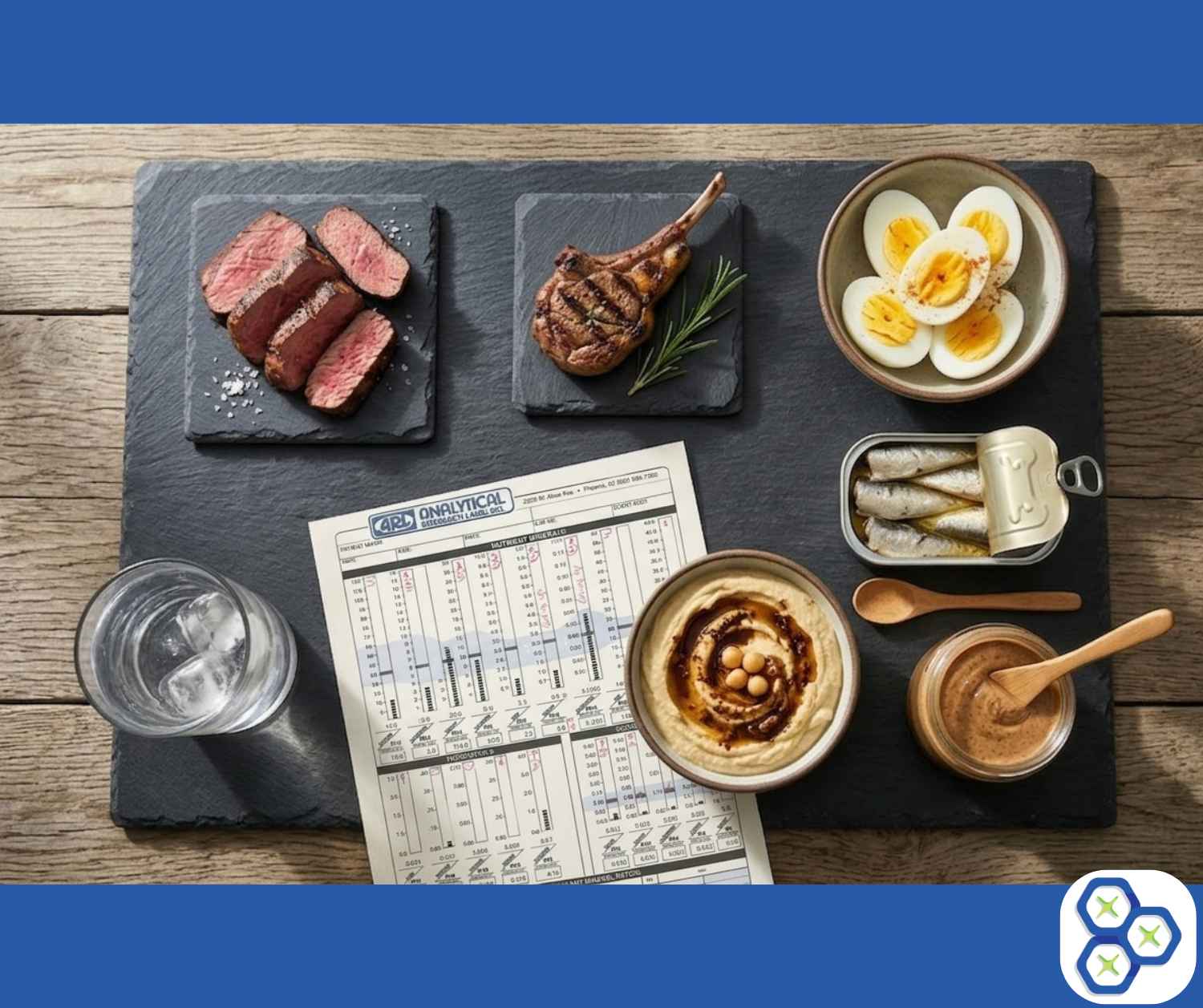
At Analytical Research Labs (ARL), we analyze the specific ratios between crucial minerals to determine your biological blueprint.
Bio-Individual Proteins for Symptoms of Protein Deficiency in the Fast & Slow Oxidizers
When you look beyond the caloric profile and see the mineral signature, you realize your diet can be a tool for balance.
The Fast Oxidizer Blueprint
This body is “running hot.” Fast Oxidizers are highly stressed, hyper-metabolic engines. Their cells burn through minerals and protein at an alarming rate, needing grounding amino acids to stabilize their nervous system.
For this metabolism, precision often involves incorporating rich animal proteins with grounding mineral profiles 2-3 times a week, alongside slower-burning fats, to prevent metabolic burnout.
The Slow Oxidizer Blueprint
This body is “running cold.” Slow Oxidizers have a sluggish thyroid and adrenal system. For them, “too much” heavy protein, especially red meat, can slow digestion even further, stressing their liver and pancreas.
Precision for this metabolism often requires a focus on lighter proteins with unique, stimulating mineral profiles to “spark” cellular energy.
| Blueprint | Goal | Protein Strategy |
| Fast Oxidizer | Calm the stress, Ground the Adrenals. | Emphasize red meat (Beef, Lamb) 2-3x/week; richer sources like sardines (Ca/P), hummus, and roasted tahini (Mg/Cu) to slow down the metabolism. |
| Slow Oxidizer | Spark the Thyroid, Stimulate Adrenals. | Prioritize lighter sources like Chicken, Turkey, Goat, and white fish, focusing on potassium (K) and selenium (Se) signatures to “light the furnace.” |
Animal Proteins: Precision Sourcing for “Grounding”
To stabilize a fast-burning metabolism, we prioritize “grounding” nutrients and proteins that offer high zinc and iron density.
| Protein Source | Recommended Frequency | Primary Mineral Signature | Metabolic Role |
| Grass-Fed Beef | 2-3 Times Weekly | Zinc, Iron, B12 | Heavy-duty repair; grounds fast oxidizers. |
| Lamb | 2-3 Times Weekly | Zinc, Selenium | Supports thyroid function and tissue integrity. |
| Chicken / Turkey | Daily Staple | Potassium, Selenium | Lighter aminos for daily cellular maintenance. |
| Eggs | Daily Staple | Folate, Phosphorus | A “perfect” balanced mineral signal for most types. |
| Goat / Wild Game | Occasionally | Copper, Iron, Zinc | Provides nutrient variety to prevent plateaus. |
Grounding Animal Proteins: Beef, Lamb, and Wild Game
- Grass-Fed Beef: These should be incorporated 2-3 times per week. They provide the heavy-lifting nutrients required for deep tissue repair. Essential for blood building and cellular repair.
- Lamb: Provides unparalleled tissue repair and powerful thyroid support for Slow Oxidizers.
- Chicken and Turkey: Excellent “lighter” proteins for daily use for those needing to stimulate a slower metabolic rate.
- Goat: A unique, stimulating nutrient profile is often better tolerated than beef by sensitive metabolisms.
- Eggs: A complete nutrient package and bio-individual staple.
- Wild Game: Highly nutrient-dense and a copper source; wild game should be used occasionally to provide a unique mineral variety. Occasional Bison or Beefalo can be eaten as well. Requires a specific bio-individual application to avoid copper toxicity.
- Eggs: The “perfect” protein package, offering a balanced mineral signal for almost every metabolic type.
The “Tiny Fish” Safety Protocol: Avoiding Mercury
Fish is a potent protein source, but the mercury crisis in our oceans makes sourcing a clinical priority.
- Atlantic Caught Sardines: These are the gold standard. You may consume 3-4 cans weekly. They are small enough to be low in mercury while providing high calcium, Omega-3 fatty acids, Vitamin D, and phosphorus.
- The Weekly Pulse: Once a week, you may enjoy a portion of anchovies, herring, or smelt. These tiny fish provide a safe way to diversify your amino acid intake without heavy metal accumulation.
| Source | The “Primary” Mineral | The Clean Sourcing Blueprint |
| Atlantic Caught Sardines | Calcium & Phosphorus | The Clinical Staple. The only large fish safe for routine consumption. Eat 3-4 cans weekly for its high Ca/P ratio. |
| Anchovies, Herring, Smelt Once a week | Phosphorus & Potassium | Tiny fish. Low enough on the food chain to have a lower mercury load, providing varied mineral signals. |
The Toxicity Trap: Why Shellfish and Lead Risks Matter
The primary risk with fish and seafood is heavy metal contamination, especially mercury. To protect your cellular health, we must eliminate sources that introduce toxic interference.
- The Shellfish Ban: Please avoid all SHRIMP, CRAB, LOBSTER, SCALLOPS, OYSTERS, OCTOPUS, CALAMARI, and EEL. These species are highly contaminated with mercury and other environmental toxins. They often act as “ocean filters,” concentrating the very poisons we are trying to detoxify.
- Fish to Avoid: Other than the tiny species mentioned above, ALL larger fish contain unacceptable mercury levels to be eaten routinely.
The Lead Risk in Bone Broth: A Clinical Warning
Bone broth is often out there as a “superfood,” but we must be cautious. Because lead is sequestered in bone tissue, many commercial broths contain unacceptable lead levels.
- The Benefit: High-quality broth provides the gelatin and phosphorus needed to seal the gut lining and support joint repair without the toxic interference of heavy metals.
- The Bone Broth Rule: While bone broth is excellent for calcium and phosphorus, bones can sequester lead. To ensure safety, only use bones from verified grass-fed and finished beef. This significantly reduces the risk of lead contamination in your healing elixirs.
Plant-Based Protein, Vegetarian or Vegan Protein & Fats Options
You can achieve metabolic repair on a plant-heavy diet by focusing on high-density aminos that align with your mineral needs. Eliminating symptoms of protein deficiency takes time and precision, along with targeted supplements.
The Fish: Precision Sourcing to Avoid Contamination
| Source | The “Primary” Nutrient | The Metabolic Signature |
| Hummus | Potassium & Copper | Best sourced with a high ratio of chickpeas to tahini for balanced mineral input. |
| Roasted Tahini (or Roasted Sesame Butter) | Copper & Magnesium | A source of essential copper (Cu). Requires strategic bio-individual application, especially for those with low metabolic copper OR copper toxicity. Supports energy. |
| Dried Beans (e.g., Lentils, Black, Kidney) | Potassium & Molybdenum | The foundational protein/mineral signal for vegetarians. Fiber-rich molybdenum (Mo) source, aiding liver function, liver detox, and steady energy. |
| Roasted Almond Butter | Magnesium & Vitamin E | An anti-inflammatory, antioxidant fat and protein, supporting skin health and liver detox. |
- Dried Beans: Lentils, black beans, and kidney beans provide essential molybdenum and potassium.
- Roasted Almond Butter: A clean source of magnesium and healthy fats.
- Roasted Tahini (Sesame Butter) & Hummus: This combination provides a vital copper-to-magnesium ratio that supports cellular energy production.
- High-Quality Dairy: For those who tolerate it, dairy can provide an immediate calcium boost, though it must be in balance against your HTMA sodium/potassium levels.
Frequently Asked Questions About Symptoms of Protein Deficiency and Metabolic Repair
What about Dairy as a protein source?
For some blueprints, yes. Dairy can be a powerful source of calcium (Ca). However, if your HTMA reveals a “Fast Oxidizer” who is already hyper-calcemic, or a “Slow Oxidizer” whose calcium shell is too hard, dairy might accelerate cellular stall rather than fix it. Dairy, and even the type of dairy (A1 vs. A2, raw vs. pasteurized), requires a data-driven approach based on your specific mineral signature.
I am a Vegetarian/Vegan. How do I apply this precision nutrition?
Precision is essential for non-animal eaters. Your body relies heavily on complex combinations. Your main mineral signal comes from Dried Beans (Molybdenum/Potassium), supported by complete proteins like Quinoa, Amaranth, Tempeh (Fermented Soy), and Hemp Hearts.
Our HTMA blueprint will precisely indicate if your ratios call for more of the alkaline, high-potassium profile of plant sources, or if you are “copper toxic” and need a strategy to balance the heavy copper load found in many plant staples.
Why is grass-fed beef bone broth recommended over conventional options?
It is an unparalleled source of gelatin, glycine, and essential bone minerals like Calcium and Phosphorus. However, some bone broths contain unacceptably high lead levels, as lead is stored in the bones.
The key to the blueprint is sourcing. Only use bones from animals that have been raised on lead-free pastures (verified grass-fed and finished) to ensure the therapeutic benefits aren’t cancelled out by toxicity.
Avoid “seafood or shellfish” broths entirely, as they are often more contaminated.
Can I eat more than four cans of sardines per week?
Even the cleanest fish contain trace amounts of mercury. Capping your intake at 3-4 cans ensures you get the nutritional benefits without crossing the threshold into heavy metal toxicity.
Is it possible to have “too much” protein?
In a metabolic sense, yes. If your body cannot synthesize the aminos, they can stress the liver and kidneys. This is why we use data to determine your specific protein needs rather than following generic “high-protein” trends.
Why am I losing muscle even though I eat plenty of protein?
This is usually a synthesis issue. If your minerals (like Zinc or Magnesium) are out of balance, your body cannot “unlock” the amino acids you eat. HTMA identifies where this block is occurring.
Why should I avoid shellfish like shrimp or scallops?
Shellfish are much more likely to carry contaminants like mercury and other toxins than free-swimming tiny fish like sardines or anchovies. To trigger true metabolic repair, we must remove toxic stressors from the diet.
Is roasted tahini different from raw tahini?
Yes. For many, roasted tahini (sesame butter) is easier to digest and offers a more available mineral profile for supporting metabolic heat.
Is plant-based protein enough for muscle growth and repair?
Yes, if your mineral levels support amino acid synthesis. HTMA helps identify the blocks that often prevent vegetarians from utilizing the protein they eat.
Hair Analysis and Symptoms of Protein Deficiency and Metabolic Repair
In a world full of “protein bars” and “energy shakes,” true vitality doesn’t come from a convenient fix. It comes from aligning your biology with its unique architectural blueprint. There is no quick fix for symptoms of protein deficiency; you have to strategically rebuild your foundation.
Your hair tissue has done the math; it’s now up to you to implement the solution. Stop eating blindly and start grounding your health with precision data.
Is your body repairing itself or running on empty?
Schedule your HTMA consultation today to discover exactly which protein sources your system is craving.